
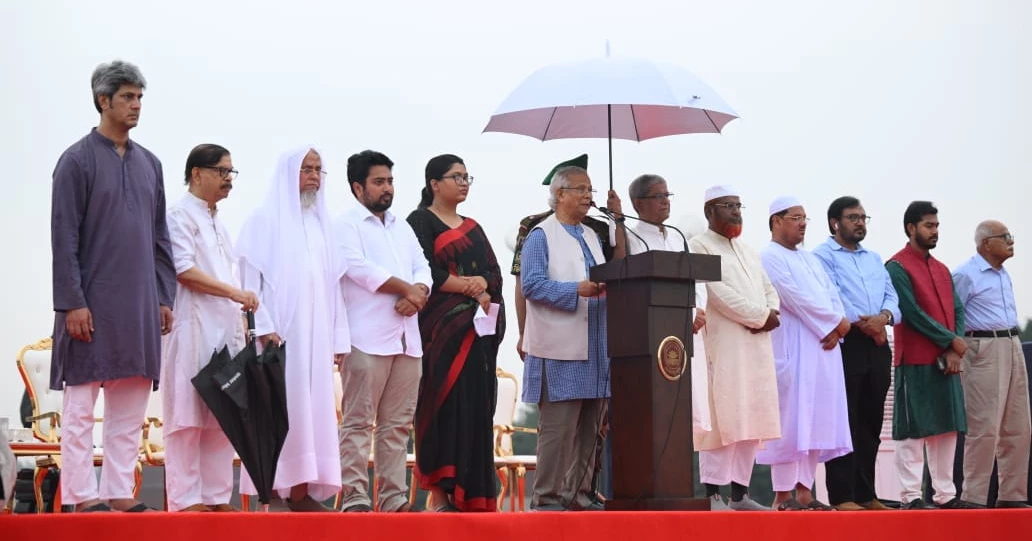
With the National Consensus Commission’s term set to expire on August 15, the much-anticipated “July Charter” remains in limbo.
The reform blueprint– aimed at reshaping Bangladesh’s constitution, electoral system, judiciary, and administration– has not been finalised due to disagreements over its implementation.
BNP Standing Committee member Salahuddin Ahmed insists that “All parties have agreed to sign. Only two or three parties have said they will consider signing if the method of implementation and its legal basis are determined.”
“Except for constitutional amendments, all other reform proposals can be implemented by this government within its tenure through ordinances, executive orders, and office orders. This is done every day. Constitutional changes must go through the national parliament,” he said.
Jamaat-e-Islami’s central publicity secretary Matiur Rahman Akand demands a pre-election legal guarantee: The issues on which everyone agrees should be announced to the nation and signed quickly, giving them legal form before the election. This Charter is not the matter of a single party…
“If consensus is not reached, the Charter must still be signed and declared, and the election should be held based on it,” he added.
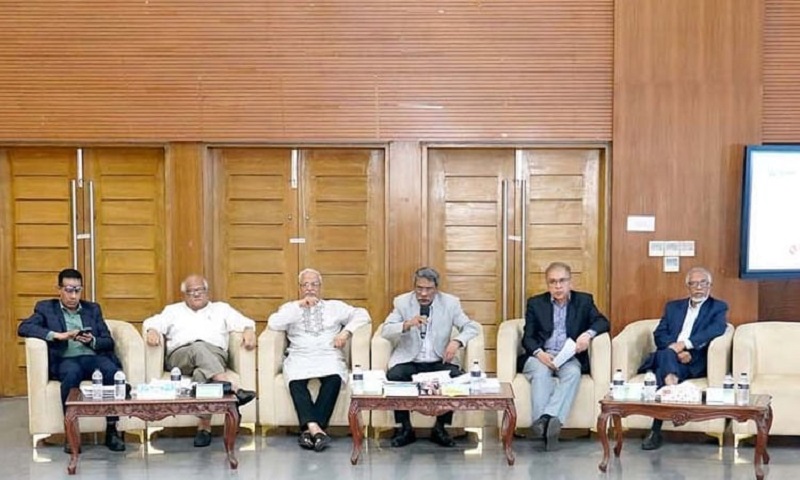
NCP senior joint convener Ariful Islam Adeeb echoes that view saying, before the election, the July Charter must be given a legal and constitutional foundation, and the next election should be held accordingly.
“Hundreds of papers have been signed by parties in Bangladesh, but unless it’s backed by law and public opinion, it’s not effective,” he said.
Professor Ali Riaz, vice-chair of the Commission, notes that “on the points where consensus is possible, it has been achieved. Where there are notes of dissent, those will remain in the Charter. If we wait for unanimity on every point, it could take years.”
Yet he acknowledges, “The final signing depends on the last draft and the parties’ responses. We want to do it quickly.”
Political analyst Mahiuddin Ahmed says the lack of consensus is not necessarily a crisis, but rather a feature of Bangladesh’s political culture.
“Parties apply pressure to push their own agendas. Some may even seek to delay the election. But if most parties agree on something and only one does not, the public may assume that party does not want reform.”
Despite multiple rounds of dialogue, the deadline looms large.
The Commission will resume talks this week, but if the parties fail to agree before August 15, the July Charter’s fate– and its potential to shape the country’s political reforms– will remain uncertain.
The July Declaration was announced by Chief Adviser Professor Muhammad Yunus on August, 5. Although major political parties attended the declaration ceremony, debates over it are ongoing.