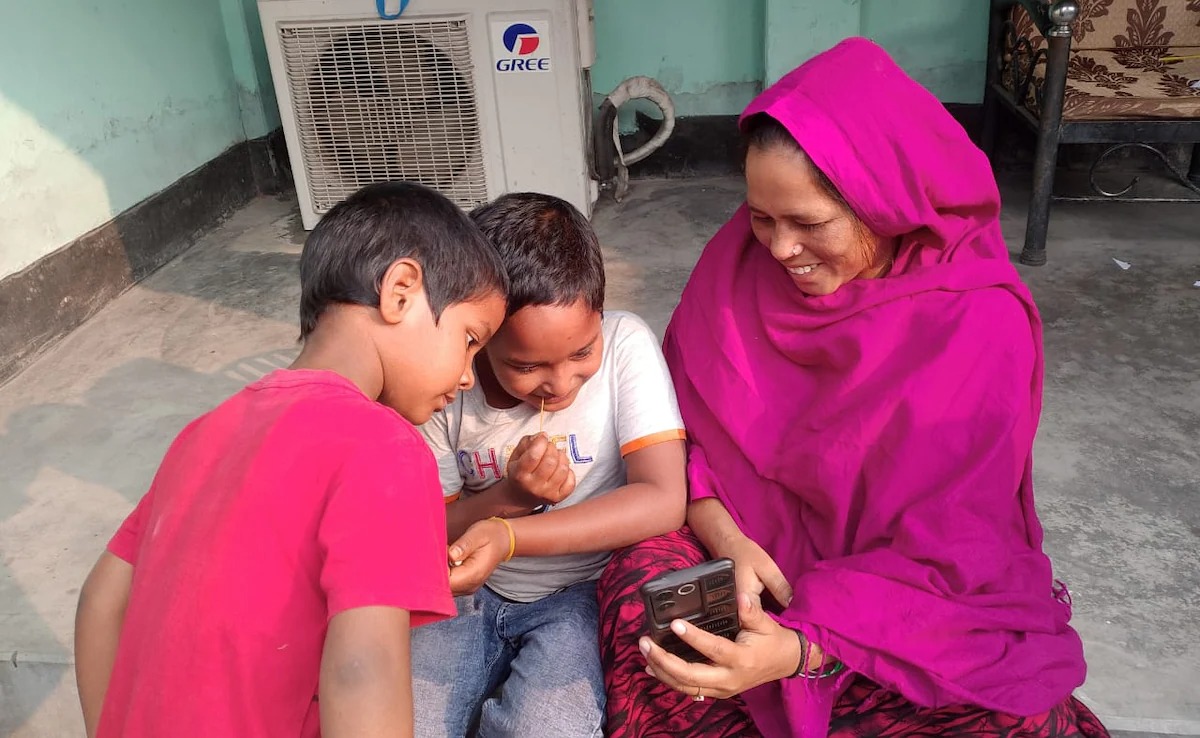
A newborn’s first cry usually settles in its mother’s arms. But when Sunali Khatun’s cry of childbirth quietened at Rampurhat Medical College last 5 January, the baby’s father was not by her side. Danish Sheikh was still trapped on the other side of the border, caught in an administrative tangle created by his own state, India. Trinamool Congress’s all-India general secretary, Abhishek Banerjee, visited the hospital and named the newborn “Apon.” But behind the name lies a harder truth: this child went almost seven months without seeing his father’s face. A state that calls itself the world’s largest democracy, through its own administrative cruelty, ensured that a newborn came to recognise his father through a phone screen rather than in his arms.
The final chapter of this story was written last Wednesday, 8 July 2026. At the Sonamasjid land port in Chapainawabganj, the BGB handed Danish Sheikh, Sweety Bibi, and her two children, Kurban Sheikh and Iman Hossain, over to India’s BSF. Exactly a year after they were forcibly pushed into Bangladesh across the Kurigram border, India was finally compelled to take them back through a formal process. But behind this single piece of news lies the story of a family’s prolonged suffering — one that raises the question of just how much protection India’s own constitution actually offers its citizens.
Where the Bleeding Began
Article 21 of the Indian Constitution states that no person may be deprived of life or personal liberty except according to procedure established by law. This right applies not only to Indian citizens but to anyone within India’s territory, as the country’s Supreme Court has repeatedly affirmed. Yet the past year in the life of Sunali Khatun, of Paikar village in West Bengal’s Birbhum district, proves that this right, however clearly written, offered her no protection in practice.
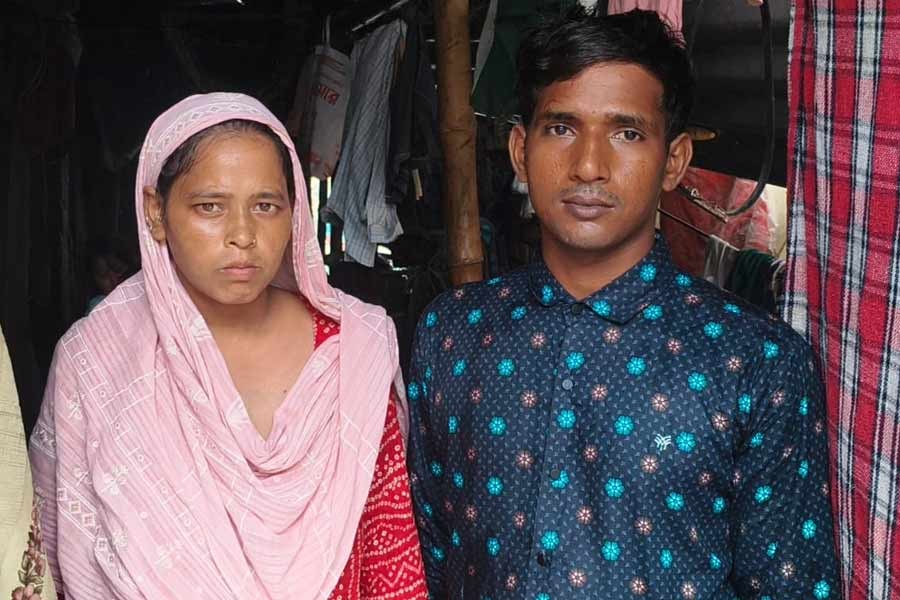
On 17 June 2025, Sunali lived in a tent in Delhi’s Rohini area with her husband Danish Sheikh and their eight-year-old son. They had come from Birbhum in search of work — Danish’s father, Bhadu Sheikh, had himself driven a rickshaw in Delhi, and his mother had worked as a domestic help for years. That morning, Delhi Police raided their tent. Even after they produced Aadhaar cards and other identity documents, they were not believed. “The police entered our tent and took us away. We were called Bangladeshis, even though we showed our Aadhaar cards and other ID,” Sunali later said. At the same time, raids targeting Bengali-speaking people were under way across various parts of Delhi — a disturbing pattern of treating the Bengali language itself as grounds for suspicion.
Although India’s own Home Ministry guidelines call for adequate time to verify citizenship, the family was declared “Bangladeshi” within a matter of days. This was the first constitutional breach: the Supreme Court’s own doctrine holds that “procedure established by law” must be fair, reasonable and free of arbitrariness — none of which featured in this decision. A family’s lifelong citizenship, their roots, their identity — all erased in a hurried decision taken over a few days.
A Pregnant Mother Pushed into the Forest
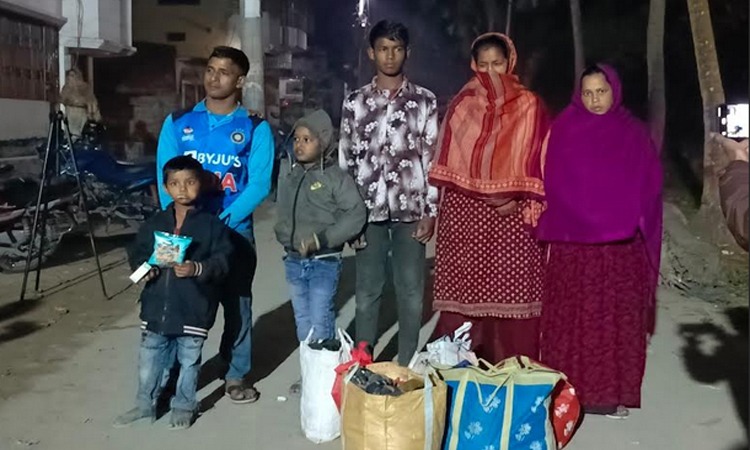
On 25 June, the BSF pushed all six of them across the border at Kurigram. Sunali was around three months pregnant at the time. Flown from Delhi to Assam, driven near the border, and then pushed towards unfamiliar forest — with no documentation, no judicial process, no humane consideration whatsoever. The very right to life that the Indian Constitution says cannot be taken away “except by procedure established by law” was trampled here by the administration itself, without so much as a court order, on the basis of mere suspicion.
A pregnant woman, her young child, and a related family — to the state, they were, at that moment, mere statistics, a few names labelled “infiltrators.” Yet only days earlier, these were people who worked as day labourers on Delhi’s streets, paid rent, and dreamed for their children. For want of one government signature, and because of the language they spoke, their entire existence was denied overnight.
Where Bangladesh Showed Humanity
On entering Chapainawabganj, local law enforcement arrested them for illegal entry. Bangladesh had not summoned them — an innocent family was made to pay the price for a decision by the Indian state that violated its own constitution, and that price was paid sitting in a foreign jail. On 22 August last year, a court ordered them sent to Chapainawabganj district jail. Among the detained was the 35-weeks-pregnant Sunali Khatun and her two minor children.
But one part of India’s own constitutional structure — the judiciary — eventually exposed this failure. Sunali’s father, Bhadu Sheikh, filed a habeas corpus petition in the Calcutta High Court, stating that he and his family were permanent residents of West Bengal, and that his daughter and her family were Indian citizens whom Delhi Police had picked up from Rohini and sent to Bangladesh. On 26 September, the Calcutta High Court quashed the deportation order and directed that they be brought back within four weeks, stating in clear terms that suspicion, however strong, cannot substitute for proof — an observation that essentially echoes Article 21 itself. On 30 September, a court in Chapainawabganj also reviewed the documents, recognised them as Indian citizens, and ordered their safe return.
Supreme Court Intervention, Yet the Wait Continued
The case for this innocent family’s release reached all the way to India’s Supreme Court. In a hearing before a bench of Chief Justice Surya Kant and Justice Joymalya Bagchi, Solicitor General Tushar Mehta told the court that Sunali and her son would be brought back on humanitarian grounds — though the central government, even while agreeing to this, reserved the right to keep them under surveillance. Here lies the story’s cruellest irony: the same state that admitted before its own top court that it had erred chose to present “humanity” as a favour rather than as a right.
Even after the court order, the executive dragged its feet for months over bringing the whole family back. On 2 December, the court granted everyone release into local custody, but India still was not ready to take the entire family back. It was only on the evening of 5 December, through a formal flag meeting at the Sonamasjid checkpoint, that the BSF accepted just Sunali and her son Sabir. Her husband Danish and the other four were taken to the border that day too, but India did not take them back. The BGB stated plainly at the time that this inhumane push-in by the BSF was a clear violation of international human rights standards and bilateral border management protocols.
The Child Who Knew His Father Only From a Phone Screen
Back in India, Sunali spent months facing serious health risks. She endured a large part of her pregnancy without any guarantee of medical care — first in a foreign jail, then through an uncertain repatriation process. Finally, on 5 January 2026, she gave birth to a son at Rampurhat Medical College. On hearing the news, Trinamool Congress’s all-India general secretary Abhishek Banerjee rushed to the hospital and named the child “Apon.” He wrote that no citizen deserved such suffering, but that the courage and resilience Sonali had shown represented humanity’s triumph.
But behind this “triumph of humanity” lies an unanswered question: where was the child’s father? Danish Sheikh was still on Bangladeshi soil, learning of his son’s birth perhaps through a phone call, a photograph. India’s Supreme Court has repeatedly ruled that the right to family unity and a life of dignity is an inseparable part of Article 21. Yet the very family whose citizenship the court itself had confirmed was kept separated for months — even at the moment of a child’s birth. The first face the newborn Apon saw was his mother’s, his grandparents’ — never his father’s. Almost seven months after the birth, on 8 July, Danish Sheikh finally held his own child for the first time.
A Battle That Didn’t End at Home
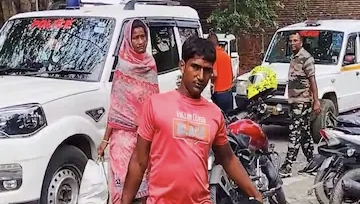
Sunali’s struggle did not end even after returning home in December. A report published in April this year revealed that, without her husband, Sunali’s family was living in extreme poverty. Thirteen people are crammed into two dilapidated rooms in Paikar village, Birbhum. Her father, Bhadu Sheikh, 72 and dependent on an inhaler, still cuts straw for the cattle with his own hands — yet has repeatedly been denied old-age allowance despite applying. The family has not received government housing benefits either, despite multiple applications to the panchayat. Neither Sunali, her mother, nor her sister-in-law receive benefits under the state’s women’s welfare scheme, “Lakshmir Bhandar.”
“Thirteen of us live crammed into these two broken rooms. How can so many people possibly live like this?” asks Sunali’s father. The very state that wrongly pushed his daughter across the border still keeps its own welfare system out of their reach. This shows that Sunali Khatun’s tragedy is no isolated administrative error — it reflects a structural failure in which poor, Bengali-speaking, marginalised people repeatedly become invisible to the state: first over citizenship, then over access to welfare.
A Constitution That Failed to Keep Its Promise
This entire episode also conflicts with international legal principles. Articles 13 and 14 of the Universal Declaration of Human Rights guarantee everyone’s right to safe movement and asylum; the principle of non-refoulement under the International Covenant on Civil and Political Rights makes clear that no one should be pushed into danger without verification. But the saddest part of Sunali Khatun’s story is that it was not foreign law that failed her — it was India’s own constitution. The right the constitution guarantees was violated by the administration itself; and even after the judiciary, including the Supreme Court, ordered that violation corrected, it took the executive a full year to act.
By contrast, the BGB’s role was restrained, transparent and humane. What the BSF did in the dark, the BGB resolved in the open — through flag meetings, immigration procedures, and coordinated medical arrangements. The BGB has consistently maintained that this BSF push-in was a clear violation of international human rights standards and bilateral border management protocols.
The Question That Remains
Sunali Khatun’s family is finally reunited today, but coming home does not mean justice has been done. The administration that declared six Indian citizens foreigners without lawful verification, that kept a family separated for a full year even after a Supreme Court order, that kept a newborn from his father’s arms for seven months — that administration’s accountability is still owed. Sunali Khatun’s story is not merely a story of a border incident; it is a question — how effective, in reality, is a constitution that claims to protect life, liberty and family unity, for a poor, Bengali-speaking woman?
India alone must answer this question — with honesty towards its own courts’ rulings, its own constitution, and its own democratic claims. Because until a state can guarantee equal speed and equal dignity of justice to even its poorest, most marginalised citizen, every right written on the pages of its constitution will remain nothing more than a promise — one that, for people like Sunali Khatun, never quite becomes real.
(Sunali Khatun: The Woman the Indian Constitution Failed to Protect is an opinion piece reflecting the author’s personal views. The opinions expressed do not necessarily represent those of the publication or its affiliates.)