
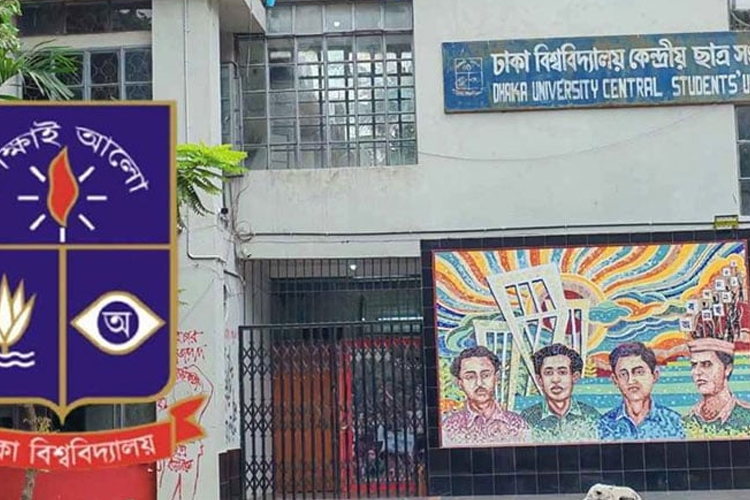
For the first time in Dhaka University’s history, Islami Chhatra Shibir clinched a landslide victory in the Dhaka University Central Students Union (DUCSU) elections, an outcome that stunned observers across the political spectrum.
The result is unprecedented, as Shibir, the student wing of Jamaat-e-Islami, has never before come close to winning DUCSU, nor even posed a serious challenge in past contests.
The margin of victory was especially striking compared to the Bangladesh Nationalist Party (BNP)-backed Jatiyatabadi Chhatra Dal (JCD), whose candidates fell far behind.
The defeat of JCD has exposed organisational weaknesses, lack of preparation, and a misplaced confidence that their established size would secure victory. Many within BNP circles now admit they had underestimated both Shibir’s organisational strength and their own vulnerabilities.
Analysts note that JCD’s campaign lacked coordination, was managed on an ad hoc basis, and failed to build broad alliances.
By contrast, Shibir tactically fielded candidates not only under its own banner but also through “United Student Alliance” coalitions, ensuring wider appeal. A critical aspect of their strategy was toning down religious rhetoric and positioning themselves as a centrist force.
This marked a significant shift from Shibir’s past image and helped it resonate with general students disillusioned by traditional campus politics.
The July student uprising and its anti-discrimination movement, which once promised to shake the establishment, collapsed in the vote, further signaling a reshaping of student politics.
Leftist and progressive groups also fared poorly, reflecting a broader erosion of their campus influence.
BNP leaders privately acknowledge that their student wing’s long absence from dormitories, organisational disarray after years of state repression, and negative perceptions rooted in past abuses all contributed to their collapse.
The party is now holding high-level discussions on the lessons of this defeat.
Some leaders even blame the rise of Shibir on the now-deposed Awami League and its student wing, Chhatra League, alleging that years of repression left the campus open for Shibir’s underground expansion.
Still, political opinion is divided on whether DUCSU results will meaningfully shape national politics ahead of the upcoming parliamentary elections under the interim government. Some argue the outcome is confined to the campus context, while others insist it carries a warning: voters, including the youth, may reject old patterns of violence, extortion, and hall domination.
Shibir’s victory also avoids contentious issues such as the 1971 Liberation War narrative, long a liability for Jamaat. Their silence on divisive history, coupled with a fresh image of moderation, has been seen as a masterstroke.
Observers like writer and researcher Mohiuddin Ahmed point out that while JCD failed to overcome its credibility crisis, Shibir capitalised on a rare moment of political vacuum.
The development has unsettled BNP, raised questions about its weakening student base, and sparked renewed tensions between BNP and Jamaat.
While BNP leaders downplay DUCSU’s impact on national politics, Islamist groups believe the student vote signals wider discontent with traditional parties and could influence the general election.