There is a profound irony in the architecture of the modern internet. Never before in human history has the sum of human expression—countless newspaper articles, anthology poems, and classic stories—been so instantly accessible to the public, entirely free of charge. Yet, this golden age of digital availability has presided over a quiet crisis: the practical decline of both the traditional paperback and the structured e-book. In an era of unprecedented access, we have found ourselves too preoccupied to read, our cognitive bandwidth entirely consumed by the booming, hyper-optimised ecosystem of social media.
On paper, the digital revolution promised a reading renaissance. The ubiquity of freely accessible PDFs and online literary repositories means a sprawling library can be carried in one’s pocket, ready to be accessed anywhere without the friction of travel. For the modern commuter, pairing this digital convenience with a physical book tucked into a bag offers a seamless, hybrid approach to reading, adaptable to any environment. In this landscape of frictionless access, the only remaining barrier should logically be personal willpower.
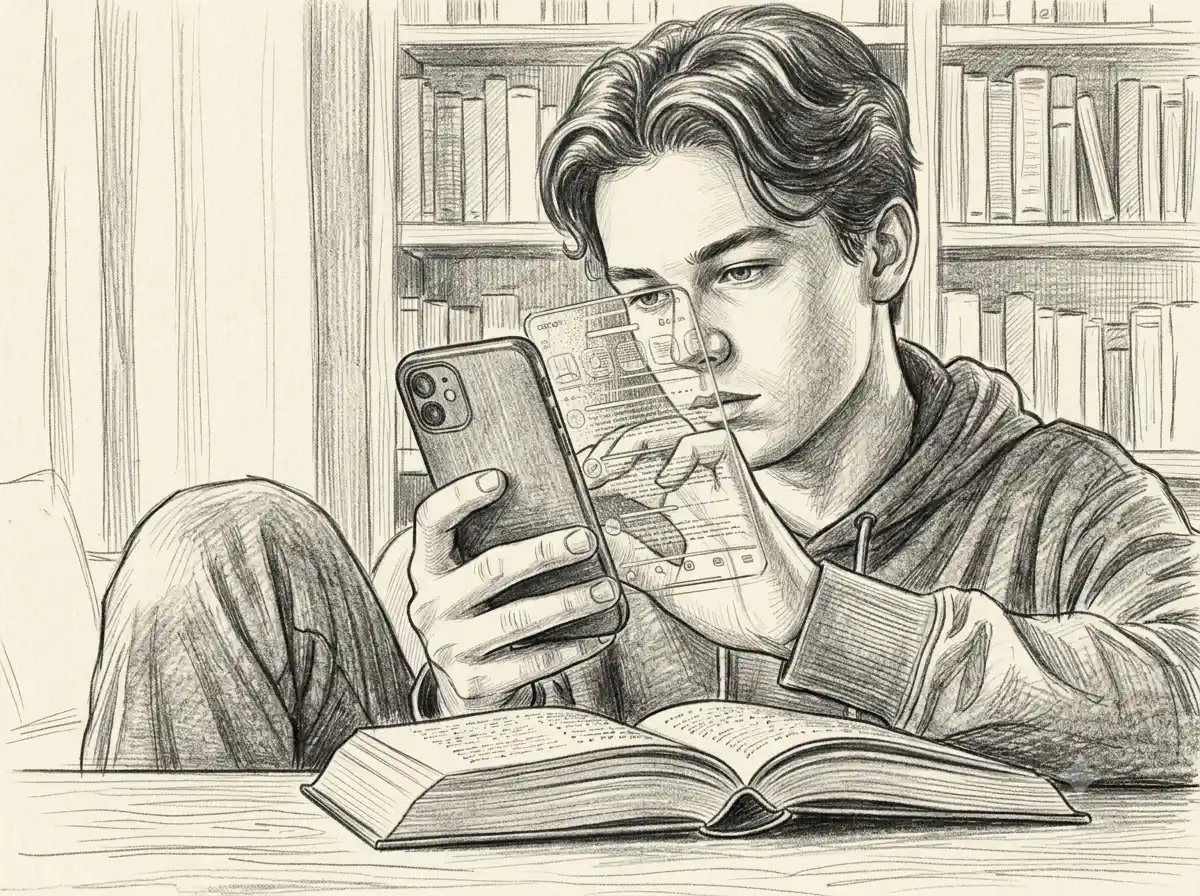
Yet, logic rarely wins against the dopamine loop. Most of us find ourselves trapped in the algorithmic quicksand of social media reels, short-form videos, and ephemeral posts. We succumb to the endless scroll simply because it demands nothing of us, choosing the path of cognitive least resistance over the demanding, rewarding journey of navigating complex plots and nuanced narratives.
The consequences of this behavioral shift are no longer merely anecdotal; they are measurable. A cross-sectional study of 2,658 university students in Bangladesh revealed a stark reality: approximately 50 per cent of students reported wasting critical time on social media, suffering from delayed sleep cycles and severely diminished concentration spans. Conversely, cognitive science offers an antidote that requires remarkably little investment. A seminal 2009 study by the University of Sussex demonstrated that a mere six minutes of reading per day can reduce stress levels by up to 68 per cent.
This shift is fundamentally driven by the evolution of peer culture. For older generations, public libraries, vibrant literary circles, and the morning newspaper were the foundational pillars of youth culture. Today, as those institutions face systemic decline, that shared cultural space has been largely monopolised by memes and trending algorithmic topics, which have aggressively crowded out e-book forums and digital reading communities.
Furthermore, the very devices that house our libraries act as double agents. Because smartphones and laptops serve a thousand different functions, they are uniquely ill-suited for deep, pensive reading. Entertainment apps and a relentless barrage of notifications constantly compete for our visual attention, systematically fracturing the cognitive flow required to absorb a book. For reading to regain its serene, effortless quality, a deliberate boundary must be drawn—locking out digital distractions for a dedicated period is no longer optional; it is a necessity.
This digital distraction is compounded by physical displacement. Rapid, unchecked urbanisation has systematically erased the quiet, contemplative spaces of our cities. Urban libraries are fading, and public parks have become too crowded and chaotic to offer sanctuary.
A Resilient Cultural Legacy: Despite the hostile urban landscape, pockets of the paperback legacy endure. The country’s literary heartbeat remains visible at landmark events like the Amar Ekushey Boi Mela. According to the Bangla Academy, this month-long cultural touchstone generated over Tk 603 crore in book sales in 2024, driven heavily by a surging youth demographic—a magnificent indicator of latent literary passion.
Simultaneously, a new contemporary infrastructure is emerging in the capital. Reading cafes are becoming increasingly prevalent across Dhaka, intentionally designed to offer the precise quietude and ambience required to lose oneself in a book over a coffee. Moreover, institutional anchors like the Bishwo Shahitto Kendro in Banglamotor and Pathak Shamabesh in Kawran Bazar have stood resilient for decades, actively keeping the literary community alive by offering subsidised books to the public.
Ultimately, transitioning away from the passive scroll toward active reading is the definitive gateway to a liberal, empathetic mindset. To read is to willingly view the world through the eyes of another, cultivating a rare capacity to embrace unfamiliar ideas. Every reader has a niche; it is simply a matter of discovering the genre that resonates.
Rather than treating reading as an unattainable luxury reserved for those with abundant leisure time, we must reframe it as a vital daily utility—an essential act of cognitive enrichment. Whether it is restricted to a few pages before sleep or integrated into the morning commute, the habit of reading quietens the mind, sharpens focus, and unlocks deep intellectual insight. Amidst the deafening noise of the digital age, books offer a profound, restorative silence. It is a silence we can no longer afford to ignore.