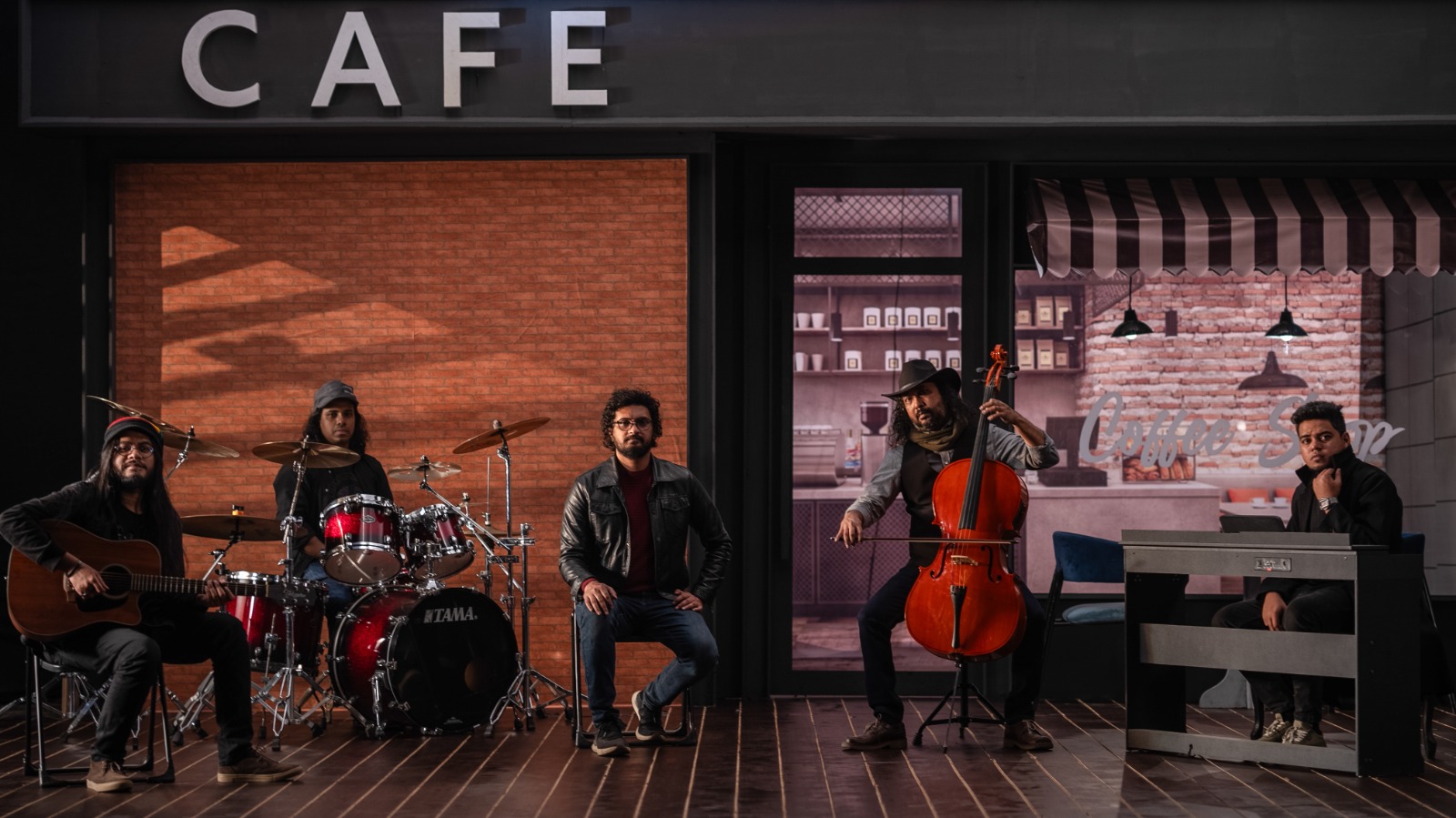
Shironamhin is set to embark on an Australia tour in April 2026, beginning in Sydney with an open-air performance at the “Bengali New Year Cultural Fest.” The festival is organized to serve Bangladeshi expatriates and local Sydney communities, with the stated aim of reconnecting audiences to the roots of Bangladeshi heritage and culture through music. Following the Sydney event, the band is scheduled to perform in several Australian states as part of a broader cultural tour.
The upcoming tour continues Shironamhin’s longstanding role as a performing ensemble representing Bengali musical tradition in international cultural settings.
A Contemporary Expression of Bengali Heritage
For nearly three decades since its formation in 1996, Shironamhin has developed a musical identity grounded in Bengali classical and literary traditions while expressed through a contemporary band format. Their compositions structurally integrate classical instruments—including sarod, flute, cello, banjo, bodhrán and indigenous percussions—with electric guitar, bass and modern arrangements.
Rather than decorative fusion, the band’s work reflects raga-based melodic phrasing, indigenous rhythmic cycles and poetic lyricism rooted in Rabindra Sangeet, Nazrul Geeti and Baul philosophy. Their 2010 full-length album dedicated to Rabindranath Tagore’s compositions remains a notable reinterpretation of canonical Bengali works within a modern ensemble framework.
 Multi-Instrumental Practice and Creative Leadership
A defining feature of Shironamhin is its multi-instrumental performance tradition, consistent with classical South Asian musicianship. Band leader Ziaur Rahman serves as lyricist, bassist and cellist, shaping narratives that explore migration, existential uncertainty, urban alienation and social transformation. Principal composer Kazy Ahmad Shafin contributes across drums, flute, sarod and experimental sound design, ensuring tonal restraint and balance while keeping traditional instruments central to each composition.
This approach distinguishes the band within contemporary South Asian music, where classical instrumentation often occupies a secondary role.

Songs Steeped in the Soul of Tradition
Shironamhin gained national recognition with their debut album Jahaji (2004). Songs such as Hashimukh and Jahaji remain widely regarded as modern Bengali classics. The cultural longevity of Hashimukh was reaffirmed when Coke Studio Bangla adopted it as a theme song, introducing it to a new generation.
To date, the band has released eight full-length albums, alongside select singles and original soundtracks. Their most recent album, Batighor (The Lighthouse), was produced as an unplugged project emphasizing organic instrumentation. At a time when AI-generated music and digital production dominate global trends, the album marked a deliberate return to classical textures and acoustic authenticity. The work continues to attract younger listeners seeking culturally grounded alternatives to globalized pop.
Cultural Representation Through Performance
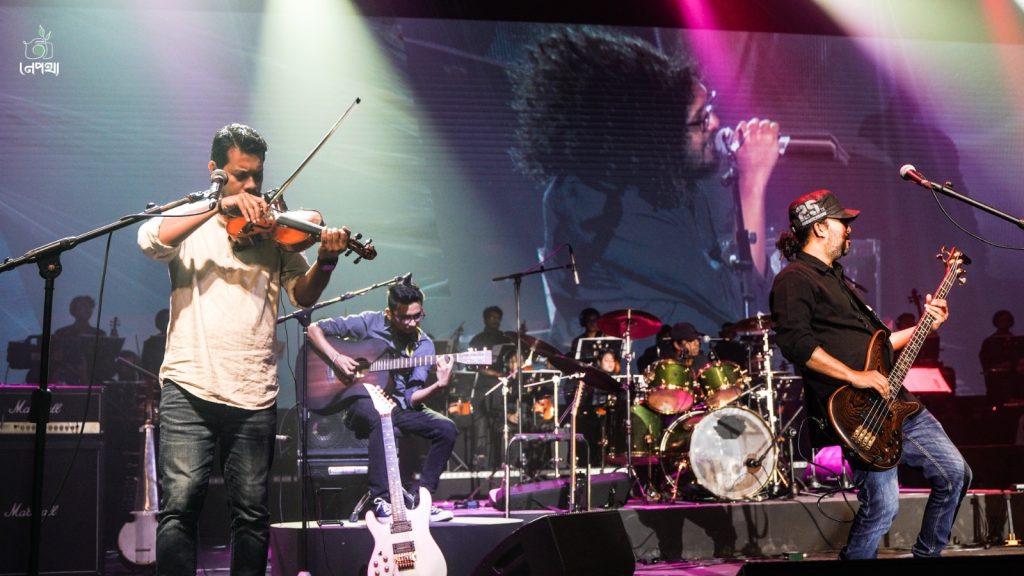
Shironamhin has performed in more than 2,500 concerts domestically and internationally, frequently in cultural exchange and embassy-supported settings rather than commercial-only tours. International appearances include the University of Malaya Concert Nights (Malaysia, 2016), the Galle Music Festival (Sri Lanka, 2014), a performance at Stade de Stein, Paris (2022) upon invitation by the Embassy of Bangladesh, an Australia tour in 2023, regular cultural performances in West Bengal, India, and their first official Canada tour in November 2025.
These engagements have consistently positioned the band as representatives of contemporary Bengali musical heritage in global forums.
 Music in Service of Public Causes
Shironamhin’s cultural role extends beyond performance. In 2009, the United Nations World Food Programme (WFP) selected the band to compose the theme song for the global Walk the World campaign, supporting school meal initiatives for underprivileged children.
The band has also performed in numerous awareness programs addressing violence against women and participated in the “Concert for Sundarbans” at Army Stadium to advocate for protection of the world’s largest mangrove forest. Additionally, they performed and engaged in seminars at the “Concert for Autism Awareness,” organized by BAMBA at Army Stadium.
Members of the band have delivered presentations on copyright and intellectual property at seminars organized by the Bangladesh Copyright Office, the Ministry of Cultural Affairs and international forums hosted by WIPO.
 Public Reach and Critical Recognition
Shironamhin’s sustained audience engagement is reflected in its digital presence. The band’s official YouTube channel has surpassed one million subscribers—the most consistently followed band channel in Bangladesh—while its Facebook following exceeds 1.5 million.
Their contributions have been recognized through major honors, including CJFB’s Band of the Generation, multiple Channel I Music Awards, the Binodon Bichitra Award, and international selection at India’s Frames Film Festival for the music video Jadukor.
Continuing a Cultural Tradition
With the 2026 Australia tour beginning in Sydney’s Bengali New Year Cultural Fest, Shironamhin continues its trajectory as a contemporary ensemble rooted in Bengali musical heritage. The band has announced plans to release new material and begin work on their ninth studio album, alongside upcoming tours in the United States, Australia and Europe.
As global music grows increasingly homogenized, Shironamhin’s work remains anchored in cultural specificity—carrying forward classical instrumentation, literary lyricism and performance traditions that connect diaspora audiences to the enduring soundscape of Bangladesh.