
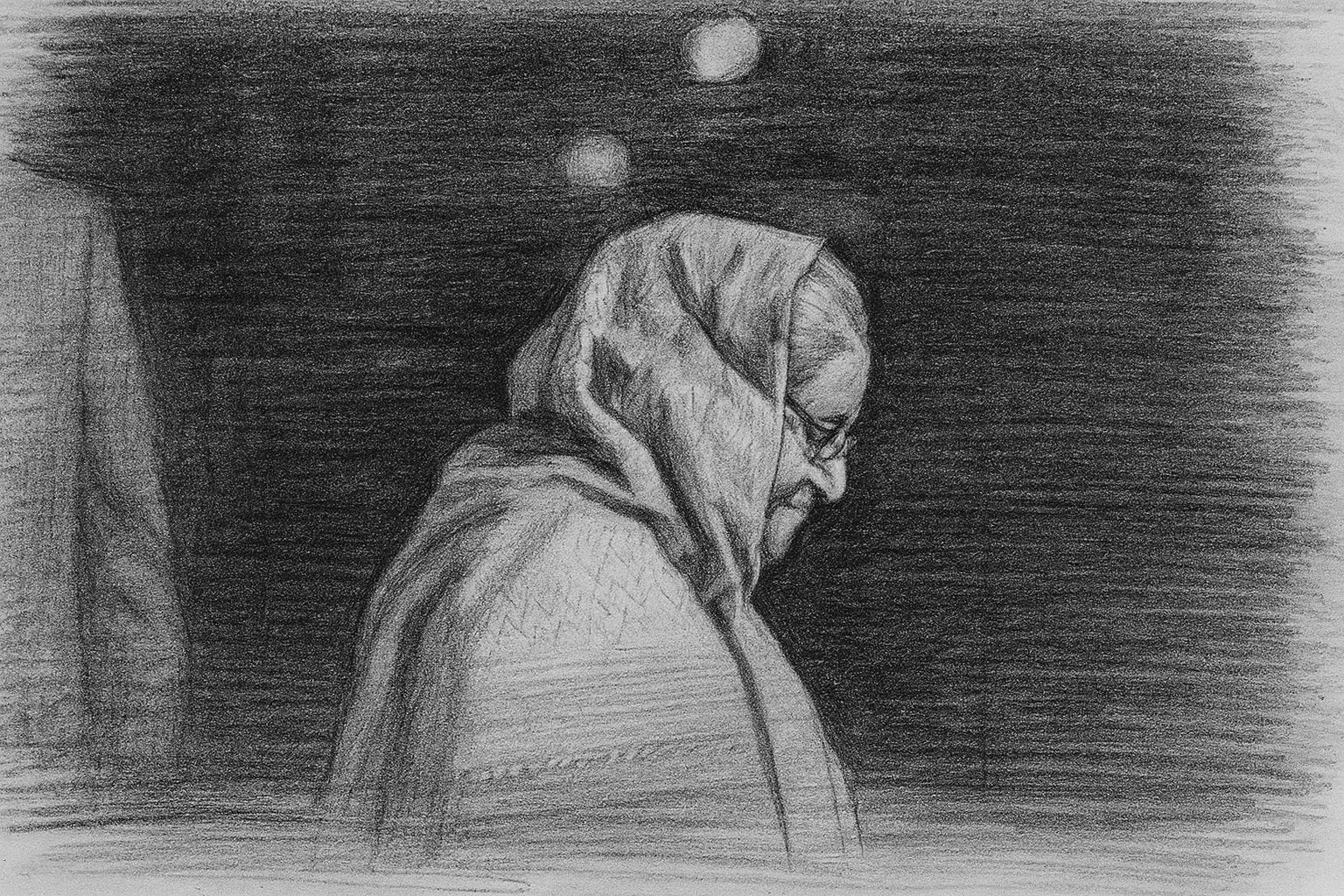
Did she realise the day had arrived?
Did she sense history’s final knock on her door, the day everyone but her and her loyalists had long awaited?
After a river of blood, the nation stood on the brink of a new dawn.
August 5, 2024. A tense morning gripped Bangladesh. Pressure was mounting as students issued their ultimate call the day before– “March to Dhaka”– with their destination fixed: Ganabhaban, the prime minister’s residence.
Did Sheikh Hasina realise this was the end?
The regime’s bloody crackdown to suppress the uprising began on July 16, leaving over 1,000 dead by that morning. Despite the carnage, the human tide surged. Even parts of law enforcement faltered, while the armed forces declared neutrality: they would stand with the people.
Ganabhaban remained under a tight security cordon. The capital was locked down under an indefinite curfew. Officials had reassured her: “Not even an ant can take to the streets.” Yet Dhaka’s walls screamed otherwise: graffiti read “Murderer Hasina,” “Dictator Hasina,” “Step Down Hasina.”
On August 3, Army Chief General Waker-uz-Zaman had announced: “The armed forces will not fire on our people.”
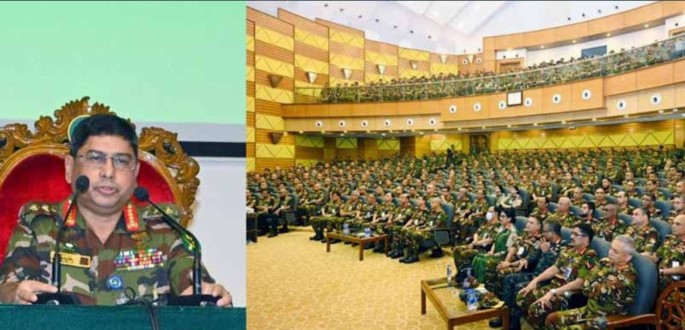
The declaration emboldened millions.
By August 4, Awami League loyalists clashed violently with protesters. Blood ran in the streets. Over 100 were killed in a single day, but the movement only intensified. That night, student leaders advanced their March to Dhaka to August 5.
Around 10:30am security chiefs briefed Hasina: “Dhaka is collapsing.”
A collapse like December 16, 1971, when freedom fighters had encircled the occupying Pakistani army, forcing them into a public surrender.
This time, it was ordinary citizens encircling the capital. CCTV footage showed millions flooding city entry points. Death tolls mounted: clashes that morning alone left around 100 more dead.
Hasina lashed out at security officials, ordering them to block the masses. They refused. “Further bloodshed won’t stop them,” they warned. “The flood cannot be turned back.”
Security chiefs delivered their ultimatum: “It’s hours now, if not minutes. Resign.”
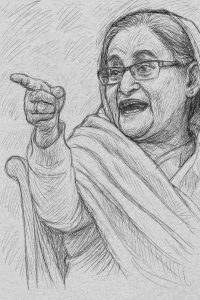
Initially defiant, Hasina relented only after pleas from her sister Sheikh Rehana and a phone call with her son, Sajeeb Wazed Joy, who convinced her that escape was her only option.
She demanded to visit Dhanmondi 32 and Tungipara to pay homage before stepping down, security forces refused. She also wanted to address the nation one last time. State Minister for Information Mohammad Ali Arafat even drafted her farewell speech. But time ran out: the crowd was less than an hour away.
By late morning, four suitcases were hastily packed. Hasina and Rehana boarded a helicopter to Bangabandhu Air Base, then fled aboard a military transport plane to New Delhi.
As her aircraft lifted off, security forces pulled back from Ganabhaban. Within minutes, crowds stormed the compound.
After 44 years pf her return to Bangladesh, Sheikh Hasina– who had ended her exile in 1981– returned to it, ousted by a student-led uprising that claimed 1,400 lives and injured nearly 20,000.
By afternoon, victory processions swept Dhaka. From Ganabhaban to Parliament to the Prime Minister’s Office, jubilant crowds flooded the streets.
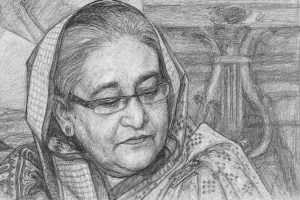
Meanwhile, police brutality persisted in some corners, even as power shifted.
Political leaders convened with the army to chart a political transition.
That late afternoon, Army Chief General Waker-uz-Zaman addressed a crowded press conference, pledging stability and dialogue with all political forces.
On August 8, Nobel laureate Professor Muhammad Yunus was sworn in as head of an interim government, signaling an end to 15 years of authoritarian rule.