The mornings in remote Natore’s ‘Chalan Beel’ began with a landscape painted in mist, rising over lush paddy fields and carved by narrow, muddy aisles. Along these paths, a young boy walked barefoot each day, a school bag slung over his shoulder, his mind filled with a yearning to see the world beyond. In a village without electricity, with the nearest paved road three and a half miles away, his daily two-mile trek to school was a testament to his determination. This was the childhood of Dr. Md. Shahinoor Rahman.
Evenings were spent on the earthen floor of his home, studying by the soft glow of a Kerosene lamp. For a few months in his youth, the simple joy of grazing goats seemed more appealing than his textbooks, and he briefly left his studies. However, he soon realized that closing the book of education meant closing the pathways of life. He returned to school, but after only three months of preparation for the then-center examination (equivalent to today’s PSC), he failed his religion (Education of Islam) paper.
His early high school years were marked by a lack of focus and poor grades. But a single conversation with his father altered the course of his life forever. His father told him:
You are out on your own—improve yourself through your own efforts. Whatever you achieve in life is yours. If you fail to do anything, you can always come back. What I leave behind might be enough for you to get by.
Those words struck him like a stone. He abandoned his bad company and immersed himself completely in his studies. The results began to change. In his 1998 SSC exams, he earned star marks with letters in four subjects, and the news spread throughout his village.
While studying for his HSC at New Government Degree College in Rajshahi, he first heard the name “BUET” from a senior. Though he failed on his first attempt, his perseverance paid off on the second try, and he was admitted to the Department of Urban and Regional Planning at the Bangladesh University of Engineering and Technology, fulfilling half of his dream.
After graduating, the pull of higher education remained strong. Following two years of work, he earned a German Academic Exchange Service (DAAD) scholarship to complete his master’s degree in Germany and Chile. Upon returning to Bangladesh, he joined BUET’s Japan Institute of Disaster Prevention and Urban Safety as a lecturer. During this time, he also completed a certificate course in Geospatial Technologies from the world-renowned ITC at the University of Twente through a Netherlands Fellowship. While teaching, he made a new vow: he would pursue a Ph.D. and conduct world-class research.
Offers, including the prestigious Commonwealth Scholarship, poured in from universities around the globe. He ultimately chose George Mason University in the United States for his Ph.D. His academic journey there was nothing short of brilliant: he graduated with a perfect GPA of 4.0 out of 4.0, published 16 peer-reviewed journal articles, and was honored with the ‘Outstanding Ph.D. Student Award’ in 2020—a supreme recognition of his academic excellence.

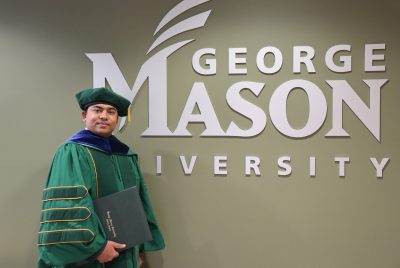
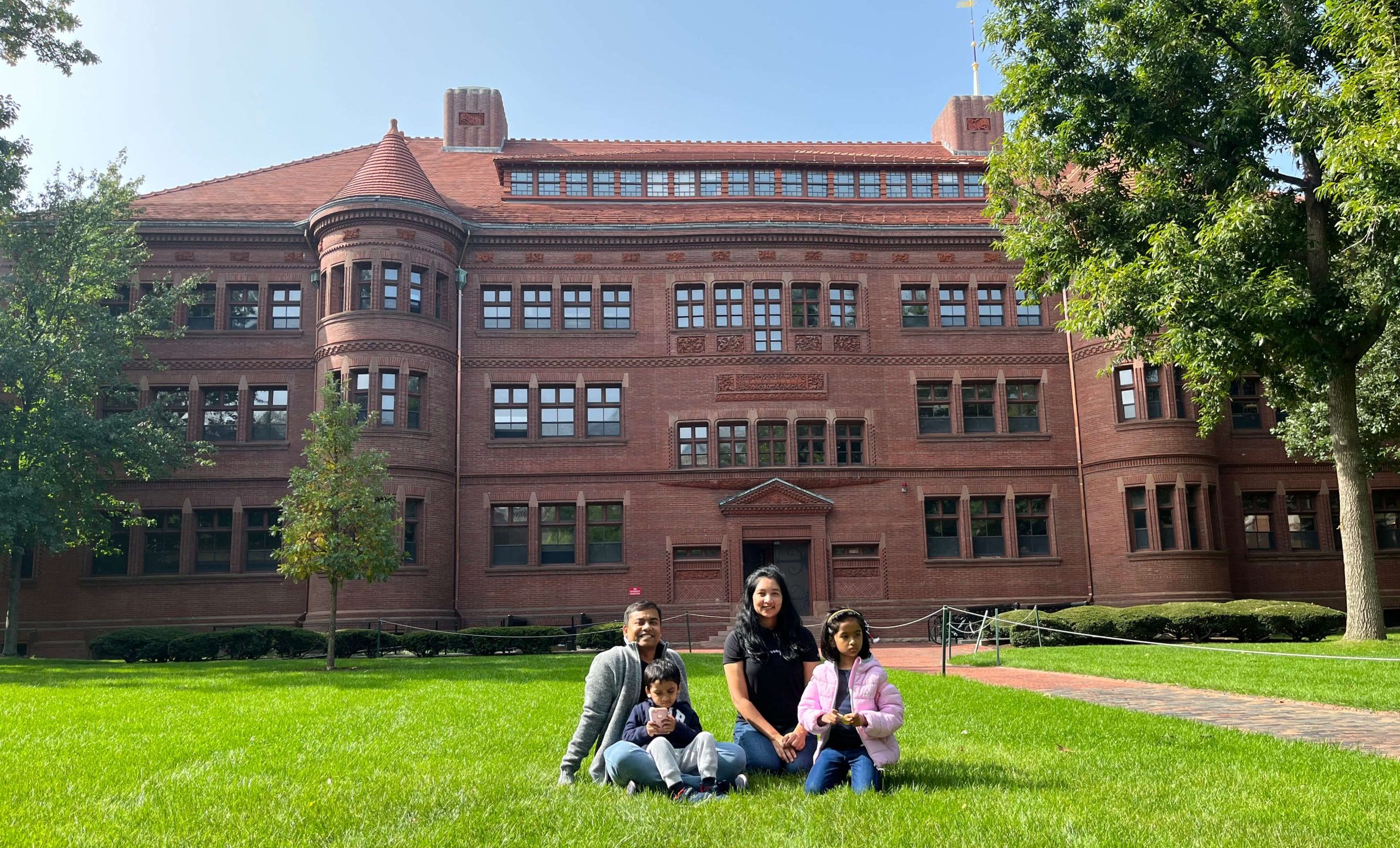
From there, a distinguished career began. He served as an Assistant Professor at New Jersey City University, followed by a post-doctoral research fellowship at Harvard University’s School of Dental Medicine. His groundbreaking research on the lack of access to dental care in America, which he termed “Dental Deserts,” gained international attention and was published in the esteemed journal JAMA Network Open.
Today, Dr. Rahman is an Assistant Professor in the Environmental Health, Climate, and Sustainability program at the Louisiana State University Health Sciences Center’s School of Public Health. He also continues to serve as a Visiting Faculty member at Harvard University. Using geospatial technology, his research focuses on climate change, environmental science, public health, natural disasters, and agricultural management. He leads multiple international projects funded by NASA, USAID, and the World Bank. In the coming years, he plans to focus on the rising temperatures and associated health risks in Dhaka city due to climate change.
But Dr. Rahman is more than just a researcher. Since childhood, he has nurtured a deep love for poetry recitation. Though he doesn’t write poems, he finds a unique power in the rhythm and melody of words, whether on a stage, in a classroom, or in a quiet moment alone.

Another of his passions is travel—a pursuit that combines his love for nature, architecture, and history. He has walked through countless corners of the world, not as a mere tourist, but with the keen eye of a planner and researcher reading the earth. From the heights of Machu Picchu in Peru to the shadow of the Eiffel Tower, from London Bridge to the Alhambra Palace in Spain, from India’s Red Fort to the palaces of Turkey, Rome’s Colosseum, Niagara Falls, the floating islands of Lake Titicaca, and the Atacama Desert in Chile—in every place, he has sought the outlines of history, the shadows of human dreams, and the map of natural beauty. These experiences have opened new horizons in his research, giving him a unique perspective on how the vastness of nature and the design of cities can coexist.
The boy who once waded through mud and water to get to school, who had left his studies to herd goats, and who struggled with his grades, is today making Bangladesh proud on the world stage through his intellect, perseverance, and indomitable will. Dr. Md. Shahinoor Rahman’s life is a living proverb: if you remain true to your dreams and work tirelessly, any obstacle can be overcome. His story is not just one of success; it is an epic of human patience, rebirth, and the art of forging a path where none exists.
Dr. Rahman’s core message to young people is one of unwavering effort: “Hard work, hard work, and more hard work.” He often says, “Life is too short, never cut your dream.”
He believes one must dream big and run relentlessly toward that goal. Failure is inevitable, and stumbles are part of the journey. But it is crucial to remember that every fall is a new lesson, providing the strength, direction, and inspiration to move forward.
He reminds the youth that there are no shortcuts in life. Progress comes through continuous learning, as a weak foundation of knowledge and education makes it difficult to endure.
Another remarkable aspect of his life is his adaptability. He changed schools, crossed paddy fields, and left his village home for the city. Each transition was difficult, but he never complained. Instead, he adapted and refused to retreat. This ability to adjust to new environments helped him move forward and conquer challenges.
Finally, he tells young people that true satisfaction comes from helping others. Therefore, alongside personal success, one must strive to contribute to society.