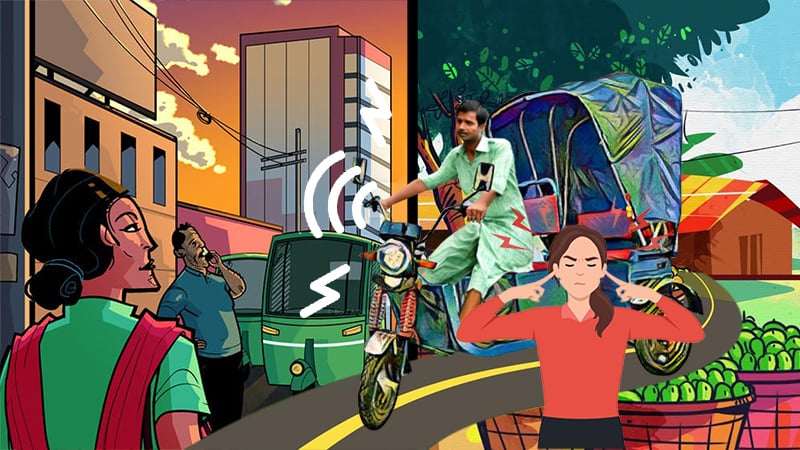
Despite being known as smokeless and environment-friendly vehicles,battery-run auto-rickshaws are increasing noise pollution. The horns of these cheap technology vehicles are one of the main sources of noise pollution. All these vehicles are spreading beyond the alleys of the city to the suburbs and even the villages along with noise pollution.
Research has shown that the level of noise emitted by these vehicles is several times higher than the limit set by the Department of Environment. Most of the people of the country are at risk of diseases starting from hearing loss to high blood pressure, insomnia and diabetes due to constant noise pollution.
According to economists, it is creating a huge amount of employment. For this reason, this problem has to be solved by improving the technology. But neither the government nor the manufacturers have any engineering research to develop technologies aimed at reducing pollution.
Battery-run auto-rickshaws have created 40 to 50 lac jobs across the country. It is the only manufacturing sector after the garment industry that has been able to generate such a large number of employment. – Economic researcher Maha Mirza
About suffering
David lives in the Farmgate area. Auto-rickshaws are always running on the road in front of his house. He said, ”Overshadowing the sound of all types of vehicles, a battery-run auto-rickshaw’s strange horn can be heard from the house. It’s very annoying and the kids are having a lot of problems.” When the horn blows at night, they tremble in their sleep, even we tremble as well. From the ground floor to the top floor of the eight-story building. We all are being disturbed because of this.”
He complained, “They (battery-run auto-rickshaws) are doing this regularly in spite of the presence of the police. Even if the car is stopped and the horn is tested, no one says anything to them (battery-run auto-rickshaws). There are old people here, sick patients too. Everyone is having problems.”
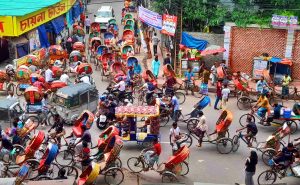
Nargis akhter standing in front of Tejgaon Government High School in the capital said, ‘No vehicle with a horn, whether battery operated or not, should be kept in front of the school. Children are having headaches because of the noise. Mohammad Abdur Razzak, a senior teacher of the school, said, “Vehicles plying on the road in front of our school including battery-run auto-rickshaws, are honking unnecessarily, which is harmful to all of us. It causes hearing problems. I, myself, also have hearing problems due to this.
In front of Mirpur General Hospital located in Block A, Section-12, Mirpur, a tangle of battery-run auto-rickshaws can be seen on the road. Abdullah Al Kafi, a doctor at this hospital, said, “As a result of noise pollution, it is difficult to maintain concentration while talking and listening to patients.”
When the horn blows at night, they (the kids) tremble in their sleep, even we tremble as well. – David lives in the Farmgate area
Next to Block C, a madrasa student Anas Amin said that, ”the battery-run auto-rickshaws that pass through the road in front of the mosque are blowing their horns very loudly. This not only causes problems in their studies, but also to the Muslims who are praying.”
Ahmad Rubel, a resident of Mohammadpur, regularly travels by battery-run auto-rickshaw. He said, “I don’t know what physical damage is being caused by so much noise, but I can feel that there is always a disturbance in my head. It is difficult to talk on the phone while moving on the road.”
Pathetic state of suburbs
As there is no ban like in the capital, battery-run auto-rickshaws have now the sole reign of the country’s small districts and upazila cities. Its numbers are increasing at an uncontrollable rate.
Prameet Ghosh, the owner of Jagdish Sweets Store located at Bara Bazar intersection in Kushtia, said, “There are many autos in this city. There is always a competition to see who can go first. As a result, the use of horns increases. It is difficult to listen any other thing here.”
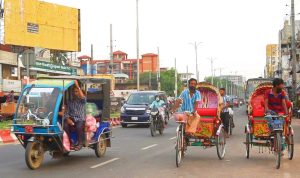
Rahim, a battery-run auto-rickshaw driver in Kushtia city, said that he experienced various physical problems including hearing problems from the noise all day. Electric horns are used in battery-run auto-rickshaws. Due to this, the noise level is also high. This causes problems for both the drivers and the passengers.
Traffic policemen are also victims of noise pollution because of standing on the road for a long time. Kushtia city’s traffic police Md. Sajjad said, “Battery-run auto-rickshaws or easy bikes, all types of vehicles give a lot of horns during traffic jams. Listening to the sound of these horns all day, makes me feel a bit restless going home, which gets fixed after a while in a calm environment.”
Auto-rickshaw on the village road
Not only in the capital or small towns, but also in the quiet streets of villages, battery-run auto-rickshaws are widely used and creating noise pollution.
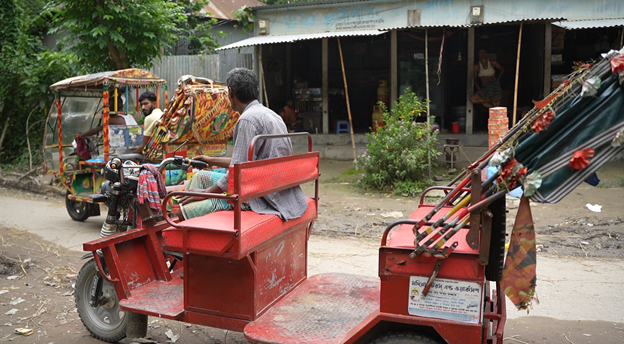
Akhtar Uddin Ahmed, chairman of Manikganj Dighi Union, said, ”Battery-run auto-rickshaws and motorcycles both use loud horns here. It is a cause of annoyance to all. Everyone wants to get relief from here.”
Manik Modok, who works in a gold shop on the side of the road in Patrail village in Manikganj, said, “Battery-run auto-rickshaws honk their horn, which causes problems. But nothing to say. The less the horn is played, the better for the environment.”
What is the sound level of the horn?
An audit was conducted by Channel I Online in collaboration with the Center for Atmospheric Pollution Studies (CAPS). Audit shows-
- The sound level of the metal electric horn of the battery-run Easybike is 100 to 115 decibels.
- The sound level of the plastic made electric horn of the battery-run auto-rickshaw is 90 to 105 decibels.
- The sound level of metal horns blown by pedal rickshaws is 70 to 85 decibels.
Analyzing this result, the chairman of CAPS, Professor Dr. Ahmed Kamruzzaman Majumdar said, “In the research, we have noticed that these battery-run auto-rickshaws are making noise up to 115 decibels. The minimum noise it produces is also much higher than the 40 to 50 decibels set by the Department of Environment for quiet areas.”
He said, “The results showed that the minimum difference in the sound of the horn of the battery-run auto-rickshaw and our traditional rickshaw (pedal driven) is about 10 decibels. It is numerically 10, but the logarithmic average is about 10 times more influential.”
Health risks are increasing due to pollution
Professor of National Ear, Nose and Throat Institute, Ashiqur Rahman said, “If the sound goes above 60 decibels, it is harmful to our ears and hearing power. Since the measuring shows that the horn of the battery-run auto-rickshaw sounds from 90 to 120 decibels, which shows how loud noise surrounds us.”
He warned, “Whenever the level of sound increases above 60 decibels, the human hearing cell, that is, the cell through which we hear, is affected. If you are in this sound for a long time, the efficiency of the cell will gradually decrease due to constant trauma and eventually it will be damaged.”
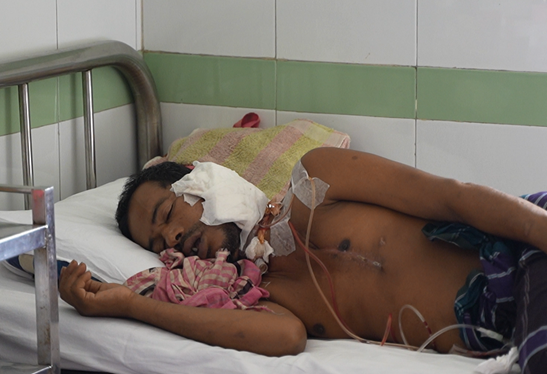
Dr. Ashiqur Rahman also warns about the health risks of those who are constantly in the sound level above 60 decibels. Such as,
- Hearing loss will occur
- Will get irritated or tendency to get irritated
- Irritation causes the brain to secrete a hormone called adrenaline, which increases diabetes and creates high blood pressure
- Such annoyance will create turmoil in them, which will affect their official, personal and even family life
- Insomnia will occur
- Headache will occur
- There is no alternative
No alternative
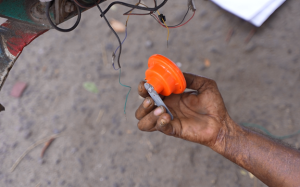
But sadly, there is no alternative to this horn, which is causing suffering and health hazards to the common man. Drivers are using these in their battery-run auto-rickshaws. It has been found that these horns are being sold in the market for 60 to 70 BDT.
Maha Mirza said, “Electric horn is available in the market. Battery-run auto-rickshaw drivers will buy what is available as well as the bus drivers. So, we have to see why it is available. There should be a policy against it.”
Sohel Mia, a battery-run auto-rickshaw driver, said, ‘These horns consume a lot of charge. It is very cost effective for us if we get an alternative.”
What is in the law
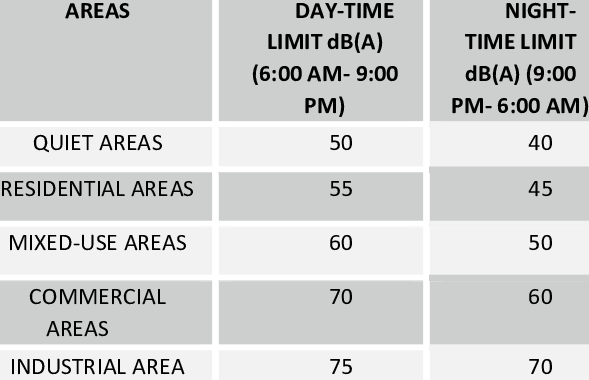
According to the ‘Noise Pollution Control Rules, 2006’, the noise level in residential areas of the country cannot exceed 45 decibels from 9 pm to 6 am and 55 decibels at other times of the day. In commercial areas, it is 60 and 70 decibels respectively. Up to 100 meters around hospitals, educational institutions and offices have been declared as quiet areas. There the levels are 50 and 40 decibels during the day and night respectively.
According to the rules, no horn exceeding the sound level can be used in any type of motor vehicle. Horns are prohibited in quiet areas. If this law is disregarded, the responsible officials can confiscate the equipment of the sound source. Failure to comply with the rules will constitute an offence.
If found guilty of noise pollution, the first offence is punishable with imprisonment for one month or a fine of five thousand BDT or both. If the same offence is committed for the second time, six months of imprisonment or a fine of Tk 10,000 or both shall be imposed.
Tapan Kumar Biswas, Additional Secretary of the Ministry of Forests, Environment and Climate Change, said that no separate work has been done regarding the horns of battery-run auto-rickshaws. He said, “Currently, the process of reforming the rules on noise pollution is going on. Everything from where the noise pollution is created is being brought under its purview.”
He also said, ”The noise pollution caused by battery-run auto-rickshaws will not be out of it. This will include anything that causes pollution. If something is left out, it will be included gradually.”
Is the solution possible?
Bangladesh Council of Science and Industry Research (BCSIR) has said that it is possible to solve the noise pollution caused by the horns of battery-run auto-rickshaws by implementing advanced technology. The chairman of this government organization that conducts research for technology innovation, Md. Aftab Ali Sheikh said, “We are preparing to research this matter. Our different groups will work in this regard.”
It is easier to control than other issues. There is no need to regulate the horn of battery-run auto-rickshaws by law.- Syeda Rizwana Hasan
Professor Ehsan Karim, Department of Mechanical Engineering, Bangladesh University of Engineering and Technology (BUET), is working on different models of battery-run auto-rickshaws. He said, “If we are going to control this thing, it has two aspects. One is the technical aspect and the other is the managerial aspect. If it is not possible to develop the managerial side, then we have to look at the technology. It is not impossible. In that case, a kind of control system should be installed with the horn that may change the horn volume to different levels depending on the overall sound level. As far as I know, there is currently no such horn available in the market at a low price. But maybe it is possible to develop.”
Syeda Rizwana Hasan, chief executive of Bangladesh Environmental Lawyers Association (BELA), said, “It is easier to control than other issues. There is no need to regulate the horn of battery-run auto-rickshaws by law. If those who give them licenses say that they cannot use any other horn apart from this horn and if it is checked while taking the license and if the police control it, if they drive other horns, then I think, this noise pollution can be controlled.”
A kind of control system should be installed with the horn that may change the horn volume to different levels depending on the overall sound level. – Professor Ehsan Karim
Salma Sultana, executive director of Nikushimaz Samaj Kallyan Prothisthan, a private organization, said that, ”Drivers should be given awareness training. It is necessary to conduct a campaign in this regard. She said, “We have campaigned with those who drive battery-run auto-rickshaws in various ways on this issue.” When asked about their horn, she said, “We have nothing to do with the pollution caused by this sound. It is the system of this vehicle.” She said,” the government needs a budget for this. The administration also needs to intervene that mandatory training should be taken to drive autos.”
A huge industry has developed
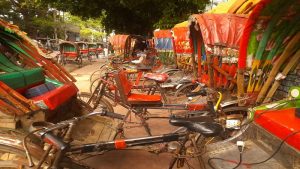
Economic researcher Maha Mirza said, “Battery-run auto-rickshaws have created 40 to 50 lac jobs across the country. It is the only manufacturing sector after the garment industry that has been able to generate such a large number of employment. It is built entirely on the creativity of local mechanics, local capital and local initiative. That is, it stands on its own without the support of the government or any other organization.”
Therefore, this researcher thinks that by solving the problems associated with battery-powered auto-rickshaws, including noise pollution, it should be recognized as a domestic industry and brought under a clear policy.