The National Consensus Commission will present an “acceptable” draft charter to all political parties tomorrow (Thursday), announced the commission’s Vice Chairman, Professor Ali Riaz.
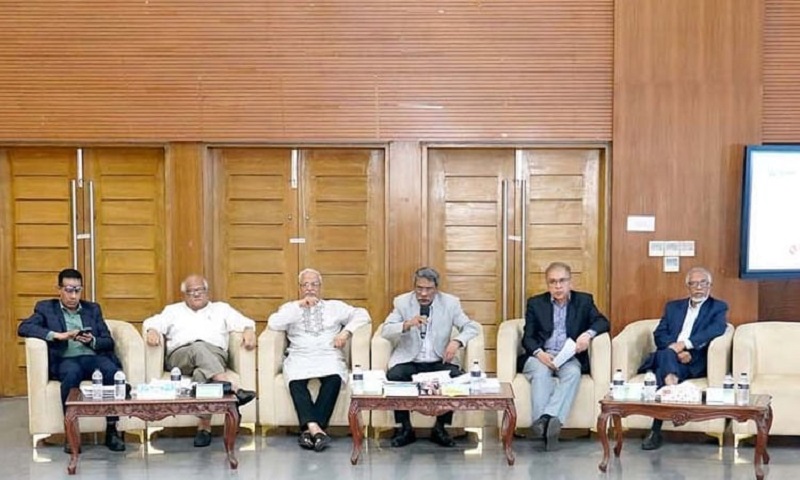
Speaking ahead of the second phase of the 22nd meeting between political parties and the commission at the Foreign Service Academy Wednesday afternoon, Ali Riaz said: By today, we will deliver a list of the agreed-upon issues based on consensus to the political parties. We hope that tomorrow we will be able to present a comprehensive and acceptable draft charter to all parties.
Urging parties to continue their cooperation to accelerate the discussions, he said, “As you have supported us from the beginning, we hope this cooperation will continue. Decision-making is a crucial part of the responsibility entrusted to us, and we are working hard to reach consensus quickly and update you by tomorrow.”
Ali Riaz noted significant progress on discussions related to women’s representation in parliament, adding that a written draft on this issue would be shared with participating parties. He also mentioned that all parties had reached a preliminary agreement on expanding citizens’ fundamental rights, though there remain differences over potential constitutional amendments.
“The BNP’s recommendations and objections have been clearly presented to the commission, and these inputs are playing an important role in advancing the discussions,” he said.
While proposals concerning the powers and responsibilities of the President are still under preparation, Riaz expressed optimism that decisions on other issues would be finalised soon.
The commission is holding discussions with political parties to build consensus on unresolved matters, including the state’s fundamental principles, presidential election procedures, and women’s representation in parliament.
At the start of day’s meeting, seven key agenda items were displayed on monitor: Women’s representation in parliament, Provisions on appointments to the Public Service Commission, Anti-Corruption Commission, Comptroller and Auditor General, and Ombudsman, Powers and responsibilities of the President [Article 48(3)], Presidential election procedure and electoral college, Structure, selection process, and jurisdiction of the Upper House, Proposals on expanding citizens’ fundamental rights and Fundamental principles of the state.
The meeting began at 3 p.m. at the Foreign Service Academy.