The humanitarian crisis in Gaza has reached new depths as three major hospitals – Al-Aqsa, Nasser, and the European hospitals – face imminent closure due to a lack of fuel and relentless Israeli bombardment. The United Nations has issued a stark warning that more medical facilities across Gaza may soon be forced to shut down, putting thousands of lives, including vulnerable newborns, at extreme risk.
Critical Healthcare on the Brink of Collapse
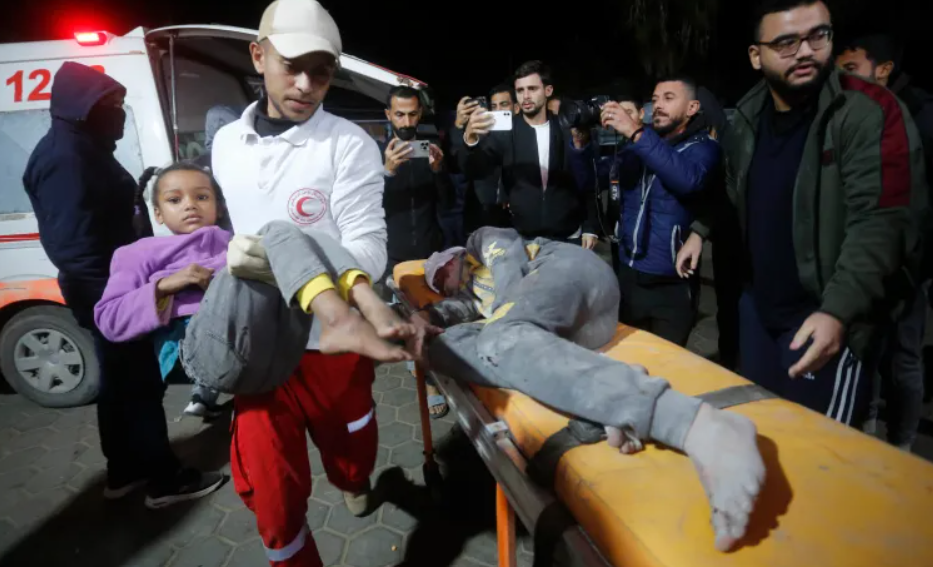
Gaza’s health officials have sounded the alarm, stating that if fuel supplies are not replenished urgently, critical healthcare services will collapse. Al Jazeera’s Hani Mahmoud reported from Al-Aqsa Hospital in Deir el-Balah, describing a dire situation where doctors are grappling with an acute shortage of essential medical supplies such as surgical tools, antibiotics, and painkillers. He emphasized that many of the injured civilians arriving at the hospital are women and children, victims of 15 months of relentless violence.
“Doctors are struggling to manage the influx of casualties,” Mahmoud said, highlighting the overcrowded emergency rooms and operating theatres under severe pressure.
At Nasser Hospital, the international medical organization Doctors Without Borders (MSF) expressed grave concerns for 15 newborns in incubators, whose lives are in jeopardy due to dwindling fuel reserves needed to power generators. MSF’s emergency coordinator, Pascale Coissard, warned that without immediate fuel supplies, “these newborns are at risk of losing their lives.”
Pope Francis Condemns the Crisis
In a rare and strongly worded statement, Pope Francis described Israel’s military campaign in Gaza as “very serious and shameful.” During his yearly address to diplomats, delivered by an aide, he appeared to reference the harrowing conditions in Gaza, where civilians are suffering not only from bombardment but also from freezing temperatures due to the destruction of hospitals and energy infrastructure.
“We cannot accept that children are freezing to death because hospitals have been destroyed or a country’s energy network has been hit,” the pope’s statement read, underscoring the urgent need for international intervention.
UN and Humanitarian Appeals
The United Nations Relief and Works Agency for Palestine Refugees in the Near East (UNRWA) has renewed its call for a ceasefire. In a statement posted on X, the organization stressed, “More humanitarian aid must come into Gaza and a ceasefire is more critical than ever.”
Despite international appeals for peace, Israel has continued its offensive across Gaza. Medical sources reported to Al Jazeera Arabic that at least six Palestinians were killed in predawn attacks in central and southern Gaza, while another eight were killed in Jabalia, a densely populated area in northern Gaza.
Mounting Casualties Amid Escalating Violence
According to Wafa news agency, Israeli strikes in the Nuseirat refugee camp killed four civilians, including three children, and left several others trapped under the rubble. Over the past 24 hours alone, at least 51 civilians have been killed, and 78 others wounded, as per reports from Gaza’s Ministry of Health.
Since the escalation began on October 7, 2023, Gaza’s death toll has risen to 46,006, with more than 109,378 others injured. The widespread destruction has displaced tens of thousands of families, forcing them to seek refuge in overcrowded shelters with little access to basic necessities.
Fear and Uncertainty in Gaza
Al Jazeera’s Tareq Abu Azzoum, reporting from Deir el-Balah, described an atmosphere of fear and uncertainty in Gaza. “The past 24 hours have been exceptionally bloody,” he said. “The scale of destruction and the rising death toll are staggering. People are living in constant fear of more attacks, with no end in sight.”
Amid worsening winter conditions, humanitarian aid organizations have warned that the situation will continue to deteriorate without an immediate and sustained flow of relief supplies, including fuel, food, and medical equipment.
A Humanitarian Catastrophe Unfolding
The situation in Gaza has been described by rights groups as a humanitarian catastrophe. The deliberate targeting of hospitals and civilian infrastructure has drawn widespread international condemnation, with calls for accountability and urgent action to prevent further loss of life.
As international mediators scramble to broker a ceasefire, the people of Gaza remain trapped in a cycle of violence, facing an uncertain future. The urgent need for humanitarian aid and a lasting peace agreement has never been more critical.