

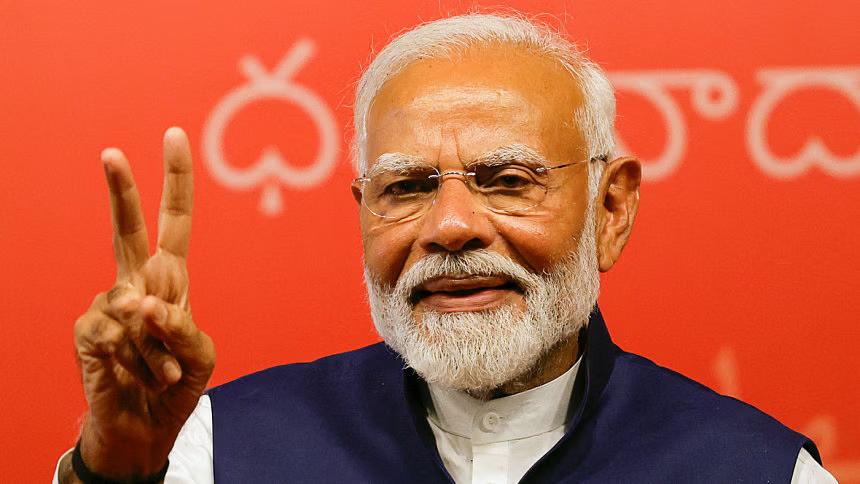
In a significant political development, Prime Minister Narendra Modi has been re-elected as the leader of the coalition led by his Bharatiya Janata Party (BJP). This coalition is now expected to stake a claim to form the next government in India. The announcement came as senior BJP leaders, including Rajnath Singh, JP Nadda, and Amit Shah, garlanded Modi at the party headquarters in New Delhi.
Despite the BJP’s continued dominance, the party failed to secure an outright majority for the first time since it swept to power a decade ago. The BJP secured 240 seats in the staggered election, falling 32 seats short of the halfway mark needed for a majority in the 543-member Lok Sabha. This result necessitates a reliance on coalition allies to form the government.
In a remarkable turnaround, the main opposition party, the Indian National Congress, won 99 seats, almost doubling its tally from the 2019 elections where it secured 52 seats. The Congress-led INDIA alliance, a coalition of various opposition parties, won a total of 223 seats. This significant gain highlights a shifting political landscape and indicates robust competition against the BJP.
Members of the Congress-led INDIA alliance are also expected to meet in New Delhi on Wednesday to discuss their future course of action. The meeting will likely focus on strategies to leverage their strengthened position and potentially challenge the BJP-led coalition in forming the government.
Modi’s re-election as the leader of the BJP-led coalition marks a pivotal moment in Indian politics. His leadership will be crucial in navigating the complexities of coalition governance and addressing the expectations of a diverse electorate. The BJP’s reliance on allies underscores the importance of coalition dynamics in the current political environment.


