
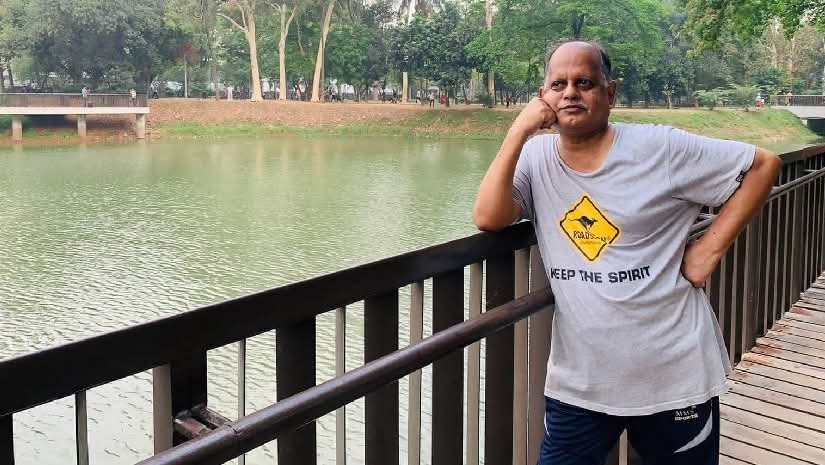
Senior journalist Bibhuranjan Sarkar is no more. He went missing Thursday morning after leaving his Dhaka residence for office. A day later, on Friday afternoon, police recovered his body from the Meghna River at Balakir Char in Gazaria, Munshiganj.
Following his disappearance, Sarkar’s son, Rito Sarkar, filed a general diary (GD) with Ramna police station in Dhaka.
Family members said he left home around 10 am Thursday but never returned. On Friday, when police retrieved an unidentified body from the Meghna river, the family identified him from photographs. The body was later confirmed at Munshiganj Sadar Hospital morgue.
Before his death, Sarkar sent a “last open letter” to a local news outlet, calling it his “final writing in life.”
His final writing: A cry of despair
On Thursday morning, just hours before he went missing, Sarkar sent an article titled “An Open Letter” to bdnews24.com. In the footnote, he pleaded: “You may publish this as my last writing.”
In the note, he laid bare his sense of failure, financial struggles, family worries, and professional neglect.
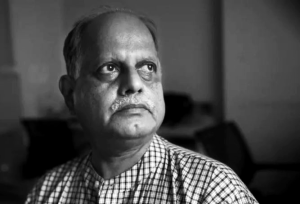
“I have no success story in life. As a journalist too, I could never firmly hold onto a strong branch. Somewhere in me, there is a deep void. I couldn’t overcome it. Let sorrow be my last companion in life. May all beings in this world be happy.”
Working at Ajker Patrika for four years, Sarkar lamented not receiving any promotion or pay raise, despite the rising cost of living.
“Prices are going up every day, but in these four years, neither was I promoted nor did my salary increase.”
He recalled that though he authored books on Bangabandhu and Sheikh Hasina, unlike others who benefitted from similar works, he never received any royalties:
“Two books of mine were published by Agami Prakashani, but I didn’t get a single taka in royalty. This is my fate.”
Political frustrations and media realities
Sarkar also expressed disappointment at the political climate and press restrictions. He said despite applying twice, he never received the housing plots that many fellow journalists got during Sheikh Hasina’s tenure.
He alleged increasing government pressure on newspapers, which forced some of his political writings to be withdrawn.

Family concerns and personal struggles
The veteran journalist also voiced anxiety over his children’s futures.
“My BUET graduate son has no job. My daughter, who passed from medical college, fared poorly in higher exams. My family members are sick, I too suffer from financial strain. How can I live in peace seeing all this?”
A life in journalism, Forgotten at the end
In a career spanning over five decades, Sarkar worked with Dainik Azad, Dainik Matribhoomi, Saptahik Chalatipatra, Saptahik Ekota, and Saptahik Mridubhashan. His political essays under the pseudonym Tarikh Ibrahim in the 1980s weekly Jaijaidin were particularly popular.
Yet, he felt neglected and unrecognised in his later years.
His tragic end reflects not only one man’s despair but also the plight of countless senior professionals who remain economically vulnerable and institutionally sidelined.
Final goodbye
Bibhuranjan Sarkar was cremated on Saturday afternoon, marking a sorrowful farewell to a journalist whose last words still echo with pain, disappointment, and a silent plea for dignity.