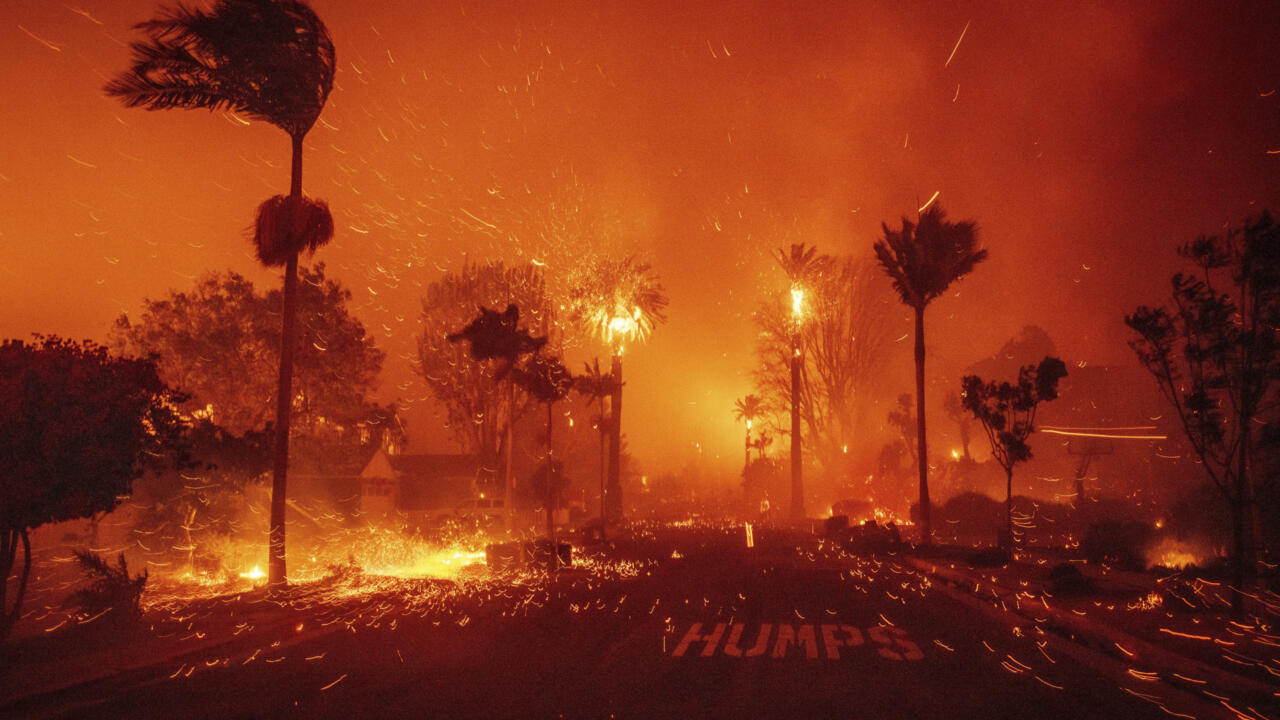
A series of wildfires swept across Los Angeles on Wednesday, destroying homes, displacing thousands of residents, and wreaking havoc on iconic locations, including Hollywood Hills and the Pacific Palisades. Dubbed the Sunset Fire, the flames quickly spread near the Hollywood Bowl and came dangerously close to the famed Hollywood Walk of Fame.
Chaotic Scenes in Hollywood
The streets around landmarks such as Grauman’s Chinese Theatre and Madame Tussauds were packed with vehicles as emergency responders tried to manage the chaos. Sirens blared, helicopters hovered low to douse the fire, and residents—some dragging luggage—fled hotels on foot. Others moved toward the blaze to capture the dramatic scene on their smartphones.
Although winds eased somewhat on Wednesday, after hurricane-force gusts fueled the fires a day earlier, firefighters continued to battle flames across four major sites. Reinforcements from other states arrived to assist local crews in combating the ongoing blazes, but officials warned that the danger is far from over.
Schools and Universities Affected
Over half a dozen schools were damaged or destroyed in the fires, including the well-known Palisades Charter High School, which has been featured in popular films such as Carrie (1976) and TV series like Teen Wolf. Due to safety concerns, UCLA canceled classes for the remainder of the week.
Destruction in Pacific Palisades
The Palisades Fire has become one of the most destructive in Los Angeles’ history, leveling entire blocks in the affluent hillside neighborhood of Pacific Palisades. Known for its celebrity homes and scenic beauty, the area was reduced to rubble as flames devoured homes, grocery stores, banks, and local businesses. The fire destroyed 1,000 structures, leaving behind apocalyptic scenes of blackened arched doorways and smoldering stone fireplaces.
Residents like Jose Velasquez tried to save their homes by spraying water as embers rained down. Velasquez managed to protect his family’s house, which doubles as a churro business, but many of his neighbors weren’t as fortunate. “We had to call a few people and tell them their homes were gone,” he said.
Among the high-profile victims were celebrities Billy Crystal, Mandy Moore, and Cary Elwes, who confirmed losing their homes. In a heartfelt statement, Billy Crystal said, “We raised our children and grandchildren here. Every inch of our house was filled with love—beautiful memories that can’t be taken away.”
Rising Fire Danger Amid Climate Change
The wildfire season in California has become increasingly severe due to climate change, with rising temperatures and decreased rainfall extending the fire season. Experts say delayed rainfall means fires can now burn year-round. This year, dry winds such as the Santa Anas, combined with months of minimal rainfall, have created the perfect conditions for wildfires to spread.
On Wednesday, wind speeds reached 80 mph (129 kph), with gusts of 35-55 mph (56-88 kph) predicted in the coming days. Firefighters warn that these conditions could persist until Friday, making containment efforts difficult.
Impact on Landmarks and Local Businesses
In addition to homes and schools, several notable landmarks and businesses have been damaged. Among them is the Reel Inn seafood restaurant in Malibu. Owner Teddy Leonard expressed hope of rebuilding, saying, “In the grand scheme of things, as long as your family is well, you’re still winning.”
Hollywood studios have also been affected. Universal Studios suspended production, and its nearby theme park remained closed. President Joe Biden signed a federal emergency declaration after meeting with Governor Gavin Newsom at a Santa Monica fire station. National Guard troops have been dispatched to aid in firefighting efforts.
Evacuations and Power Outages
Evacuations continue across Los Angeles, with 130,000 people forced to leave their homes. The Pacific Palisades alone saw a mass exodus as flames rapidly approached residential areas, leaving many scrambling for safety. In some instances, roadways became impassable as people abandoned their cars and fled on foot.
As of Wednesday evening, 456,000 residents in Southern California were without power, according to the tracking website PowerOutage.us.
Firefighters Face an Uphill Battle
Fire Chief Chad Augustin of Pasadena noted that intense wind gusts made it nearly impossible for firefighters to control the flames. “Those erratic winds were throwing embers for miles ahead of the fire,” he said. He also cited issues with the city’s water supply, which was further complicated by power outages.
Despite these obstacles, fire crews continue to work tirelessly, aided by improved weather conditions. Los Angeles Mayor Karen Bass acknowledged their efforts, saying air operations had resumed and were making progress in dousing flames.
Humanitarian Efforts and Future Challenges
With many residents displaced and temperatures expected to remain high, aid organizations are working to provide relief. The International Federation of Red Cross and Red Crescent Societies (IFRC) called for unhindered access to affected areas, noting that harsh winter weather has worsened conditions for those in temporary shelters.
UNICEF reported that 74 children, including eight infants, have died due to exposure and hypothermia since the fires began. Over one million children are among those displaced, many of whom are living in makeshift camps with little protection from the elements.
Conclusion
The wildfires raging across Los Angeles highlight the growing threat posed by climate change and the urgent need for comprehensive wildfire management strategies. As firefighters continue their battle against the flames, residents face the grim reality of rebuilding their lives amid widespread destruction.