Hamas Announces Readiness to Release 34 Captives Amid Ceasefire Negotiations
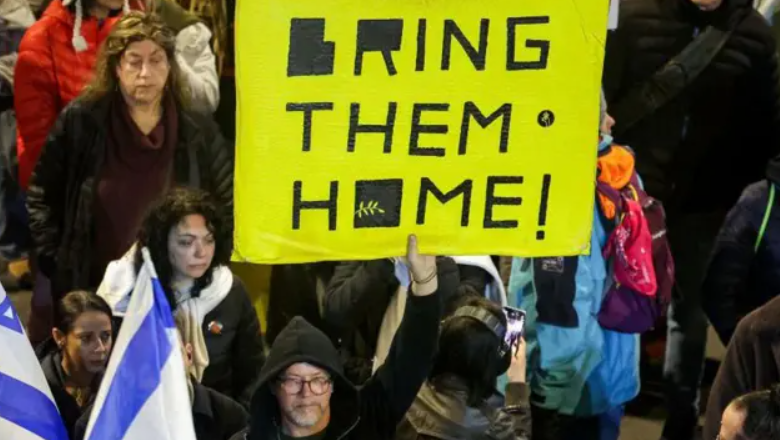
Hamas has declared its willingness to release 34 captives as part of an emerging ceasefire agreement with Israel, according to reports by international news agencies Reuters and AFP. The announcement comes amid heightened tensions and continued violence in Gaza, with the prisoner exchange deal seen as a critical step toward easing the humanitarian crisis in the besieged territory.
The reported deal involves the release of women, children, elderly individuals, and those with critical health conditions held by Hamas in Gaza. “Hamas has agreed to release the captives, whether alive or deceased,” an unnamed Hamas official told AFP. However, the official added that the group requires a week of calm to communicate with the captors and verify the status of the captives. This verification process is critical, as Hamas needs to determine who among the captives is still alive and who may have perished in the ongoing conflict.
Israeli Response and Negotiation Deadlock
Despite Hamas’s declaration, Israeli Prime Minister Benjamin Netanyahu’s office responded by stating that they have not yet received an official list of captives for release. The Israeli government remains cautious, noting that any prisoner exchange agreement will require careful scrutiny and assurances regarding the safety and condition of those to be released.
The announcement follows continued diplomatic efforts led by the United States, with Qatar hosting the negotiation talks. The Biden administration is actively mediating the discussions, hoping to finalize the ceasefire agreement before the upcoming transition of power to President-elect Donald Trump on January 20. US Secretary of State Antony Blinken, speaking during a visit to South Korea, emphasized Washington’s urgency in bringing the deal to completion. “We want to see this agreement concluded within the next two weeks, but even if it takes longer, we are committed to ensuring it happens,” Blinken said.
US Pressure and International Mediation
According to Al Jazeera’s Ali Hashem, reporting from Doha, significant differences remain between the negotiating parties. He pointed out that while Hamas has shown flexibility by agreeing to the initial release of captives, the ball is now in Israel’s court to reciprocate with a commitment to a ceasefire and withdrawal from Gaza. “Ultimately, this is a political decision that lies with Netanyahu’s government. Hamas has done its part by signaling readiness for a prisoner swap. Now it’s Israel’s move,” Hashem reported.
The negotiations are also taking place under the shadow of warnings issued by US President-elect Donald Trump. In recent weeks, Trump cautioned that if a ceasefire is not achieved by the time he takes office, his administration would take a much harsher stance on the conflict. “Trump warned that if there’s no ceasefire when he assumes office, things could escalate drastically. This warning appears directed more at Hamas than Israel,” Hashem added.
Continued Violence in Gaza
Meanwhile, the conflict continues to escalate, with Israeli forces intensifying their bombardment of Gaza. Over the weekend, the Israeli military claimed to have targeted more than 100 sites, which they described as “terrorist infrastructure.” In response, Gaza’s health ministry reported that over 100 Palestinians were killed in the latest airstrikes, including casualties at a residential building in Nuseirat camp and a police station in Khan Younis.
Since the war began on October 7, 2023, following Hamas’s surprise attack, more than 45,800 Palestinians have lost their lives, according to health officials in Gaza. Despite international condemnation and mounting calls for a ceasefire, Israel has maintained its military operations, citing security concerns and the need to neutralize Hamas’s military capabilities.
Humanitarian Crisis and Calls for Ceasefire
As the violence continues, humanitarian agencies have raised alarms over the dire situation in Gaza. A United Nations commission of inquiry has accused Israel of pursuing a policy aimed at dismantling Gaza’s healthcare infrastructure, with nearly 90 percent of the population now displaced. Additionally, the International Court of Justice (ICJ) has ordered Israel to take steps to prevent genocide in the Palestinian territory.
Rights groups have echoed these concerns, accusing Israel of committing war crimes and crimes against humanity. The humanitarian crisis, exacerbated by the ongoing blockade and relentless airstrikes, has left Gaza’s civilian population struggling to survive amid severe shortages of food, water, and medical supplies.
As diplomatic efforts continue, hopes remain for a breakthrough that could bring an end to the bloodshed. However, with both sides maintaining firm positions and the specter of further escalation looming, the road to peace remains uncertain. The international community is watching closely, urging both parties to prioritize humanitarian concerns and find a lasting solution to the conflict.