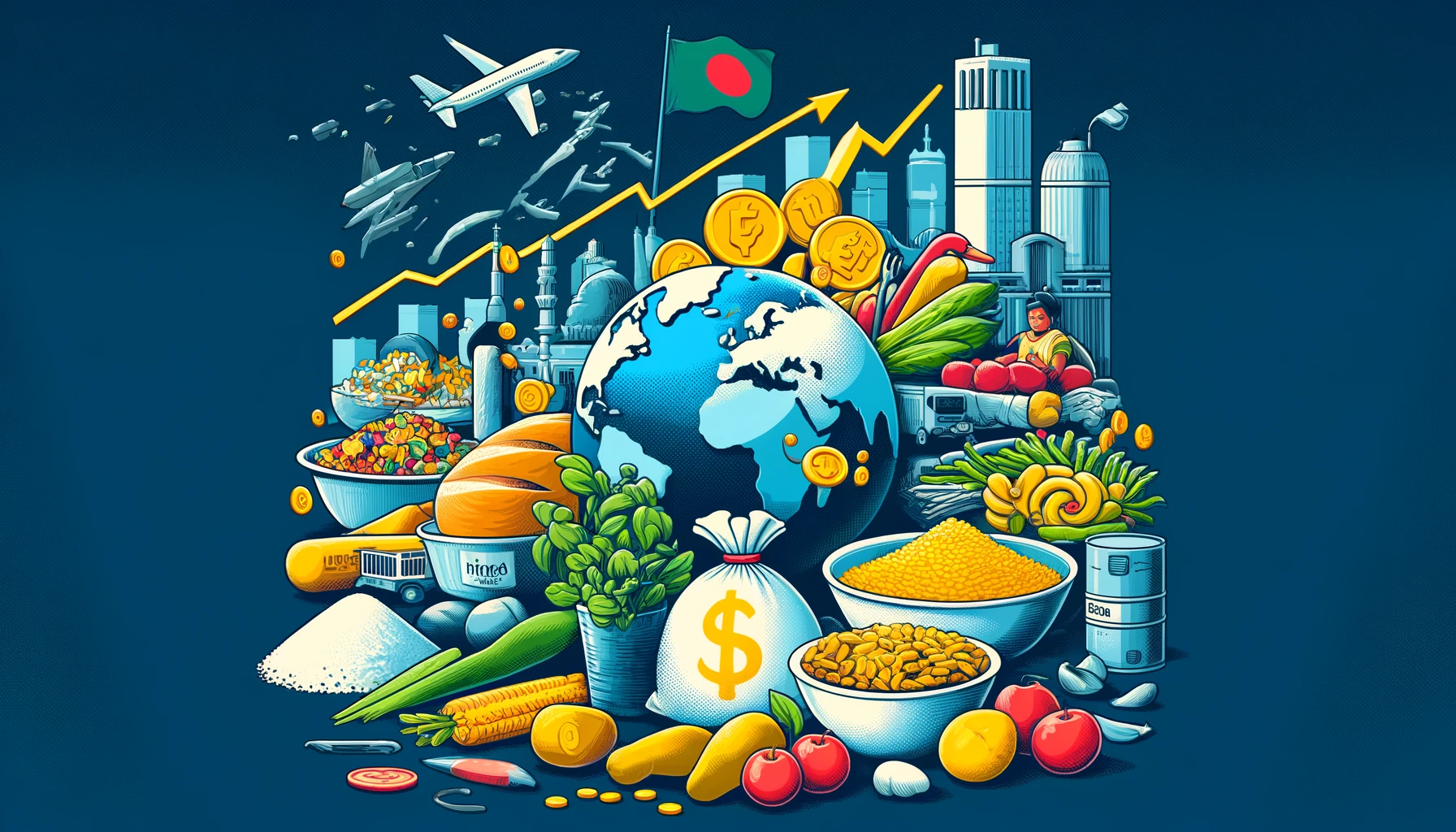
Food inflation in Bangladesh has once again reached double digits, rising to 10.76 percent in May from 10.22 percent in April. This marks the fifth consecutive month that food inflation has been in double digits.
Overall inflation also rose slightly in May, to 9.89 percent from 9.74 percent in April. However, non-food inflation fell slightly to 9.19 percent from 9.34 percent in April.
The rise in food inflation is being blamed on a number of factors, including the war in Ukraine, which has disrupted global food supplies and driven up prices of essential commodities. The depreciation of the Bangladeshi taka against the US dollar has also put upward pressure on import prices.
High inflation is a major concern for the Bangladeshi government, as it is eroding people’s purchasing power and exacerbating poverty. The government has taken a number of steps to try to bring inflation under control, including increasing interest rates and releasing food from government reserves. However, these measures have so far had little effect.
Key Points:
- Food inflation in Bangladesh rose to 10.76 percent in May from 10.22 percent in April.
- Overall inflation also rose slightly to 9.89 percent from 9.74 percent in April.
- The rise in inflation is being blamed on a number of factors, including the war in Ukraine and the depreciation of the Bangladeshi taka.
- High inflation is a major concern for the government, as it is eroding people’s purchasing power and exacerbating poverty.
Bangladesh has grappled with persistent high inflation over the past two years. Despite government efforts to curb the rising prices, these measures have proven largely ineffective, leaving inflation stubbornly high. Analysts believe that the official inflation figures released by the Bangladesh Bureau of Statistics (BBS) understate the true extent of the problem, suggesting that the actual inflation rate is considerably higher than reported.