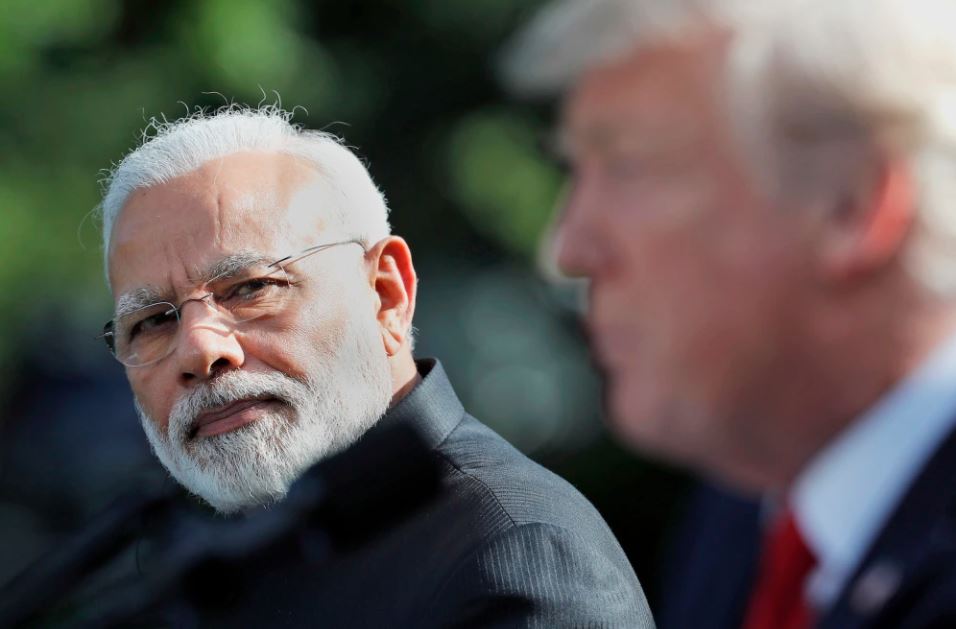
Donald Trump doubled US tariffs on India to 50% from 25%, slapping Delhi for buying Russian oil. India decried the move as “unfair” and “unjustified”. The tariffs are meant to reduce Russia’s oil income and bring Putin to the negotiating table for a ceasefire.
The new rate will come into effect on August 27.
India is now the US’s most-taxed trading partner in Asia, joining Brazil, another emerging market with which the US has a frosty relationship.
India has said its purchases are market-driven and necessary for its energy security but tariffs will “negatively impact” Indian exports and growth.
Nearly 100% of India’s $86.5bn of annual goods exports to the US will become unviable at such tariffs if they are sustained.
The average Indian exporter has said it can barely stomach a 10-15% increase, so a 50% tariff combined with duties back home will be beyond most companies’ bandwidth.
If implemented, it “will be akin to a trade embargo and will lead to a sudden stop in affected export products,” Japanese brokerage Nomura said in a note.
The US is India’s biggest export market accounting for 18% of exports and 2.2% of GDP. A 25% tariff would lower GDP by 0.2–0.4% and risk slowing growth below 6% this year.
India has for now spared electronics and pharma exports from the additional tariffs, but the eventual hit will be felt “back home in India, with labour-intensive exports like textiles and gems and jewelry taking the fall,” Priyanka Kishore of Asia Decoded, a Singapore-based consultancy, told the BBC.
Rakesh Mehra of Confederation of Indian Textile Industry (CITI), described the tariffs as a “huge setback” for India’s textile exporters, and said they will “severely dent their competitiveness in the US market.”
With the temperature now turned up, experts have described Trump’s move as a high-stakes gamble.
India is not alone in buying Russian oil– there are China and Turkey too– but Washington has decided to punish a country many view as a key partner.
India’s former central bank governor Urjit Patel said India’s “worst fears” have come true with the announcement.
“One hopes that this is short term, and that talks around a trade deal slated to make progress this month will go ahead. Otherwise, a needless trade war, whose contours are difficult to gauge at this early juncture, will likely ensue,” Patel wrote in a LinkedIn post.
The prospect of that level of damage is why few expect the tariffs to last. With new rates taking effect on August 27, India’s response in this bargaining window will be watched by nervous markets.
Will Prime Minister Narendra Modi’s government cave and quietly drop trading ties with Russia to escape the “Russia penalty”? Or will it stand firm and refuse to bend to US pressure?
Dr Bajpaee says the bilateral relationship is in a “managed decline” and has lost the Cold War-era strategic importance but Russia will remain a key partner for India in the near to medium-term.
Others feel Trump’s recent moves offer India a chance to re-evaluate its strategic partnerships.
The US’s actions could in fact “push India to reconsider its strategic alignment, deepening ties with Russia, China, and many other countries”, says Ajay Srivastava of the the Global Trade Research Initiative (GTRI), a Delhi-based think-tank.
With much at stake, trade experts say only diplomacy at the highest level can help revive a trade deal that seemed within grasp just weeks ago.
So far the Indian government has put up a strong front, saying it will take “all actions necessary to protect its national interests”.
Has Trump’s tariffs test become Modi’s biggest foreign policy challenge? And will India hit back?