
Voter backlash over the expanding conflict with Iran, skyrocketing fuel costs, and billions in military commitments for foreign conflicts triggered a sweeping political realignment on Tuesday night, delivering severe midterm defeats to President Donald Trump’s Republican Party.
Across key battleground states and historic conservative bastions, American voters delivered a sharp rebuke to the administration’s Middle East posture, handing Democrats control of the U.S. House of Representatives and pushing the party to the brink of regaining the U.S. Senate majority.
The Domino Effect of the Iran Conflict
The political fallout from the war with Iran—sparked by escalating confrontations in the Persian Gulf and deepening U.S. defense commitments alongside Israel—emerged as the central liability for Republican candidates on the ballot.
-
Energy Shocks and Everyday Costs: Since the outbreak of hostilities and disruptions along Persian Gulf shipping routes, domestic gasoline prices surged by approximately $1.20 per gallon, with diesel hovering near record highs. The compounding impact of elevated energy bills and general inflation hit working-class households hardest, eroding Republican economic arguments.
-
War Fatigue and Policy Discontent: While the administration framed military engagements as essential to supporting regional allies, voters broadly pushed back against overseas intervention. Defense expenditures linked to the conflict, which surpassed tens of billions of dollars, drew intense public scrutiny over federal priorities at home.
-
Coalition Fractures: The war caused notable rifts within the Republican base itself. Isolationist factions grew increasingly uneasy over another open-ended Middle Eastern commitment, depressing turnout among core supporters and giving Democrats an opening in normally safe districts.
Shaking the Foundations: Historic Senate Flips
The anti-war and anti-inflation backlash reverberated most visibly across the Senate map, where Democrats secured marquee pickups to dismantle the GOP’s 53–47 majority:
-
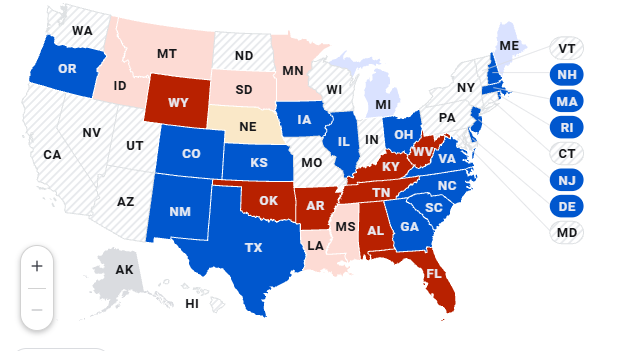
The Texas Earthquake: In the night’s most consequential upset, Democrat James Talarico defeated Republican Ken Paxton to claim a Texas U.S. Senate seat, ending more than thirty years of uninterrupted Republican statewide dominance in the state, as reported by CBS News.
-
Industrial and Southern Breakthroughs: Democrats expanded their path with major wins in the Rust Belt and the Sun Belt. Former Democratic Senator Sherrod Brown reclaimed his Ohio Senate seat, according to CBS News, while former Governor Roy Cooper secured a Senate victory in North Carolina.
-
Incumbent Holds: In Georgia, incumbent Democratic Senator Jon Ossoff successfully defended his battleground seat against a heavy Republican challenge.
-
National Chamber Tally: Of the 35 Senate seats up for election, 25 contests have been called. Democrats have won 17 seats and hold leads in 2, while Republicans have won 8 seats and hold leads in 6, putting Democrats in a commanding position to recapture the gavel as outstanding tallies are processed.
House Flips as Suburban Voters Desert the GOP
The repudiation was equally pronounced in the U.S. House, where Democrats officially retook the majority after four years of Republican control, according to CBS News.
Voters in traditionally moderate suburban districts—particularly in states like New Jersey, New York, and California—swung decisively toward Democratic candidates. Suburban independent voters, who broke toward the GOP in 2024 on promises of economic stability, overwhelmingly pointed to rising living costs, foreign policy overreach, and the administration’s refusal to seek congressional war authorizations as their primary reasons for switching sides.
A Divided Washington Ahead
The dramatic outcome reshapes the final two years of President Trump’s term. With the House returning to Democratic hands and the Senate on the verge of flipping, the administration faces divided government and intense legislative oversight.
Democratic committee leaders are poised to use their subpoena power to scrutinize Middle East military spending, enforce War Powers limitations, and block judicial and executive nominations. By prioritizing military escalation abroad over economic relief at home, the White House gambled on a muscular foreign policy doctrine—only for American voters to render a decisive verdict at the ballot box.